
The Intro
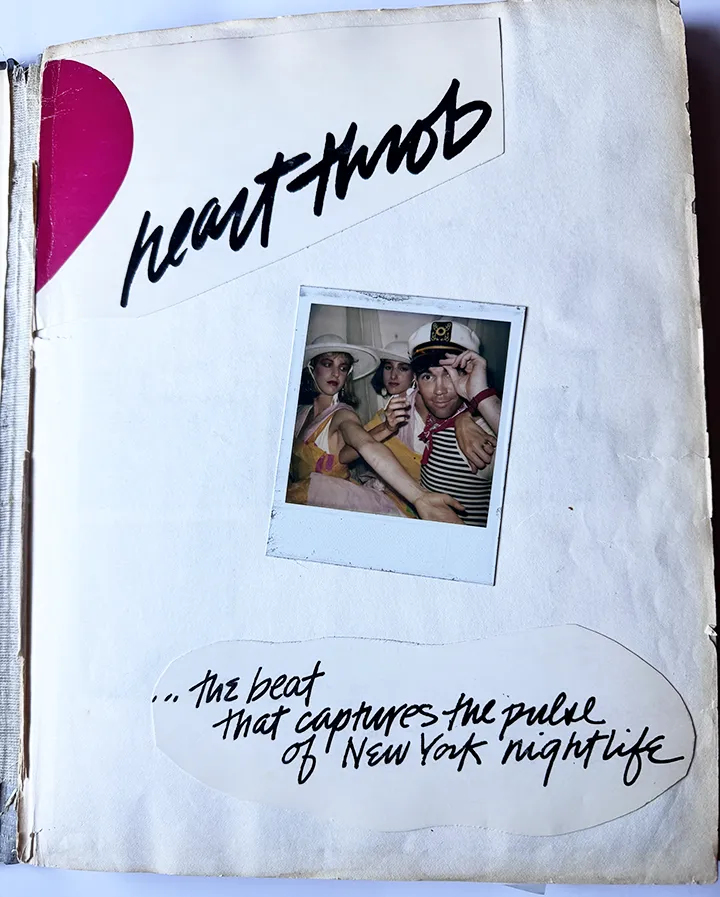
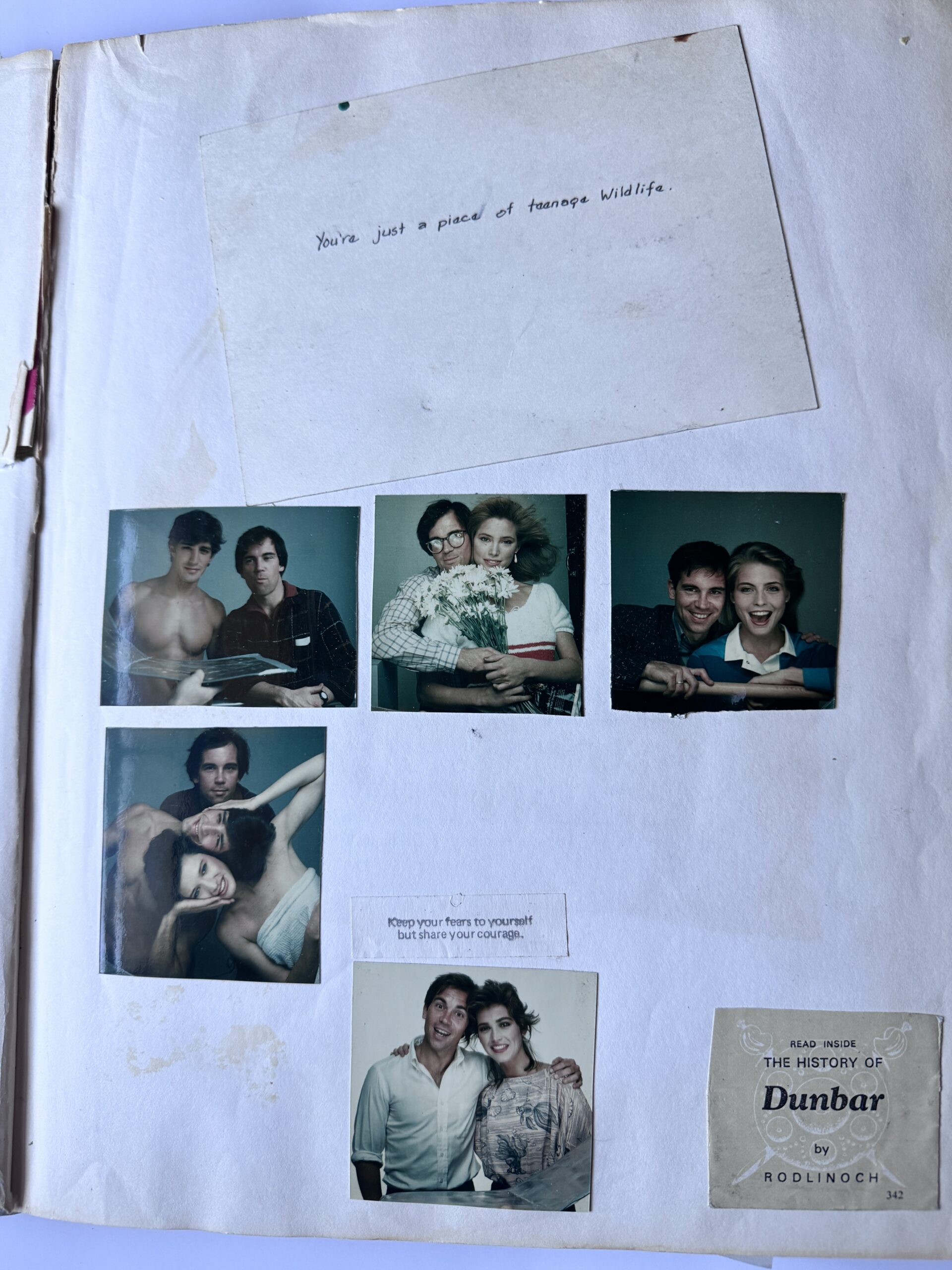
I kept a journal for about twenty years of my life. There was one from my high school years, and a second from my life in New York City in the 1980s.
These are the New York City years: 1981 until about 1990, when I moved back to Los Angeles. It is a start. There is more.
I was a young man living in New York City, at 2 Horatio Street in apartment 11D — a studio. It was a Bing & Bing building (1929), and it was glamorous. Oliver Sacks lived there, as did Andy Cohen. It had a doorman, a revolving-door entry, and a penthouse that was extraordinary. I know because I saw it once or twice.
I moved to New York to work for Condé Nast in the art department of Mademoiselle magazine. Condé Nast was fascinating. The art department consisted of one long table that held five or six layout boards. This was the age of paste-up — a nasty business of using hot wax to adhere type galleys and images to coated boards, then rubbing them down to make them stick. Layouts could be easily rearranged and often were, late at night, by Alexander Liberman, who was the Editorial Director of Condé Nast throughout the 1980s, serving in that position from 1962 to 1994. Known as a driving creative force and mentor to major editors, including Anna Wintour, Liberman wielded immense influence over the company's magazines and was known to stay late and rework layouts.
I worked on and off at Condé Nast, contributing to GQ, Self, and as a designer for Brides. Condé Nast was located at 350 Madison Avenue in the heart of Midtown.
Art directors were handsomely paid, while designers earned much less. Though on occasion, you could gain entry to the storage closets, which held an abundance of fashion.
In addition to being well paid, art directors also had access to car service at night. At GQ, we often worked late into the evening. Occasionally a blender was brought out after work and margaritas were served. Later still, as was the trend at the time, cocaine appeared.
Condé Nast was a magnet for celebrities. One time, while working at GQ, actor Jon-Erik Hexum came to visit. We were both in the restroom when I said hello. He was tall, extremely handsome, and smelled of fresh soap. A few years later, he would die as the result of a self-inflicted blank-cartridge gunshot wound to the head in a game of Russian roulette while on the set of the TV show Cover Up.
I digress.
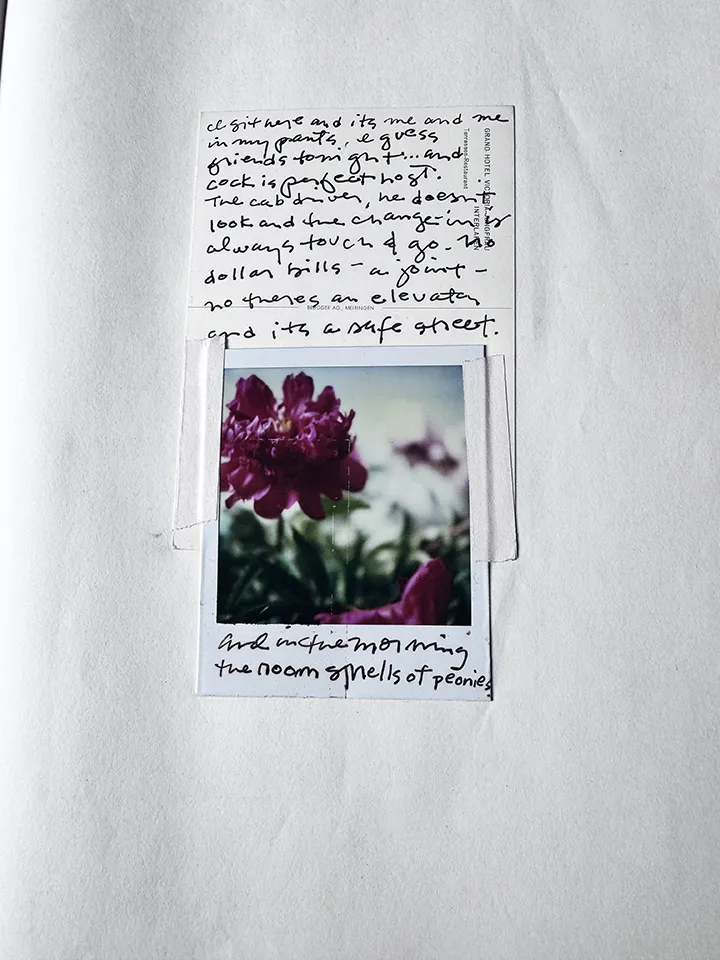
The journal was my way of remembering everything: matchbooks with phone numbers, drawings, poems from magazines, Polaroids, pornography, fortune cookies, letters from friends and writing, of course.
It was the ’80s in New York. It began so beautifully — New Year’s Eve parties with men dancing cheek to cheek, a first snow (for a boy from Southern California) on Grove Street in the Village, the nightclubs, the dancing, the parties, Broadway musicals, and then…
It was the ’80s.
Slowly, news items began to appear in the New York Native and the Village Voice about a rare cancer appearing in gay men: Kaposi’s sarcoma. We began to learn a new glossary of terms: thrush, cryptococcosis, cryptosporidiosis, and Pneumocystis pneumonia. For me, it was the genesis of a medical anxiety and trauma that has lasted a lifetime.
In time, it began to consume people. If you had anything out-of-the-ordinary, health wise, it was taken as a bad sign. The flu was no longer just flu, it could likely be the path to your demise. The publishing world was hit hard. Condé Nast was hit hard. Jay Purvis, art director for GQ and Self would be one of the first. We were men in our 30s—ambitious, creative, and energetic, so when the epidemic swept through the hallways of Condé Nast, it took the best and brightest.
Jay Purvis was among the first. He had a lived a luxurious life as art director GQ and Self. His apartments/lofts were grand.
We were good friends. He was not uncommon to get a call on a Sunday morning and be asked: "do you want to go upstate by plane?" Or a trip to Christopher Noble's New Hampshire home at Lake Winnipesaukee, would provide me with my one and only encounter with fireflies.
For a period, the information was obscure: how was this thing transmitted, kissing? Touching? We took refuge in our loneliness. If we had a partner, we held on tight, probably too tight.
By the middle of the 80s, the party was over.
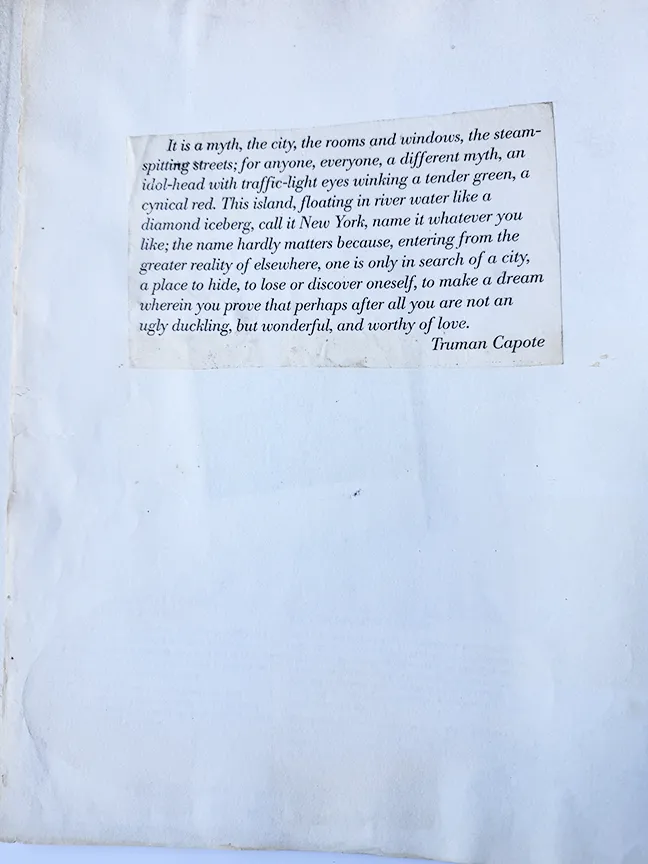
The Journals | 1980s
from the journal:
My chin has a twitch. I am nervous about meeting Roy, who called me earlier in the day and asked me to meet him. Roy is a curious person, slight, handsome, and often attractively amusing, though not without subtle cracks in the veneer of perfection. He claims that he can summon the cats from his alley in a whisper and they will dance along the ledge for him. I never doubt this.
Roy has kept me waiting for an hour now, and I am curious as to the reason he would have me meet him here rather than at his house in the Village. They are near one another. Finally Roy arrives, wearing a large jacket.
I am watching the video on the TV screen when he presses up against me and whispers hello.
I dance.
Naked, Roy holds me in his arms and I am suddenly safe from the assassins outside the door. Roy is no coward and is able to fend off even the most frightening danger. Roy’s flesh is handsome and like sturdy wood; his face conjures a hero and his touch conceals an answer. I think I love him.
We walk to the store to buy some fruit for breakfast, and Roy is there beside me when the taxi nearly runs me over. I am safe and not alone, and the world seems young.
Later. Why has Roy left me?
The night began with the soft cello music he liked so much. Then he heard the sound of cats in the alleys and said he needed to see them. Roy left and has not returned. I hear the wailing of the cats in the alley and know that Roy is there among them, dancing.
NYC 1982
Poem | for Stephen Skinner
And so the evening ends
with the sudden breaking of light in a doorway
calling morning.
The yellow cab in the sun, rushing to a destination,
while you hold the possible hesitation
on your lips,
and I mumble no, no, no
(was that perfection?)
and hold your hand.
We cling and fall into kisses
more sincere than they are.
I touch your hair —
the hair of so many for both of us.
You leave.
I stumble back into the room,
now so narrow with tales
and the conceit of lovemaking,
alone. Forgotten.
I close the lights of daylight
and dream of winter
and warm bodies.
— Stephen Skinner
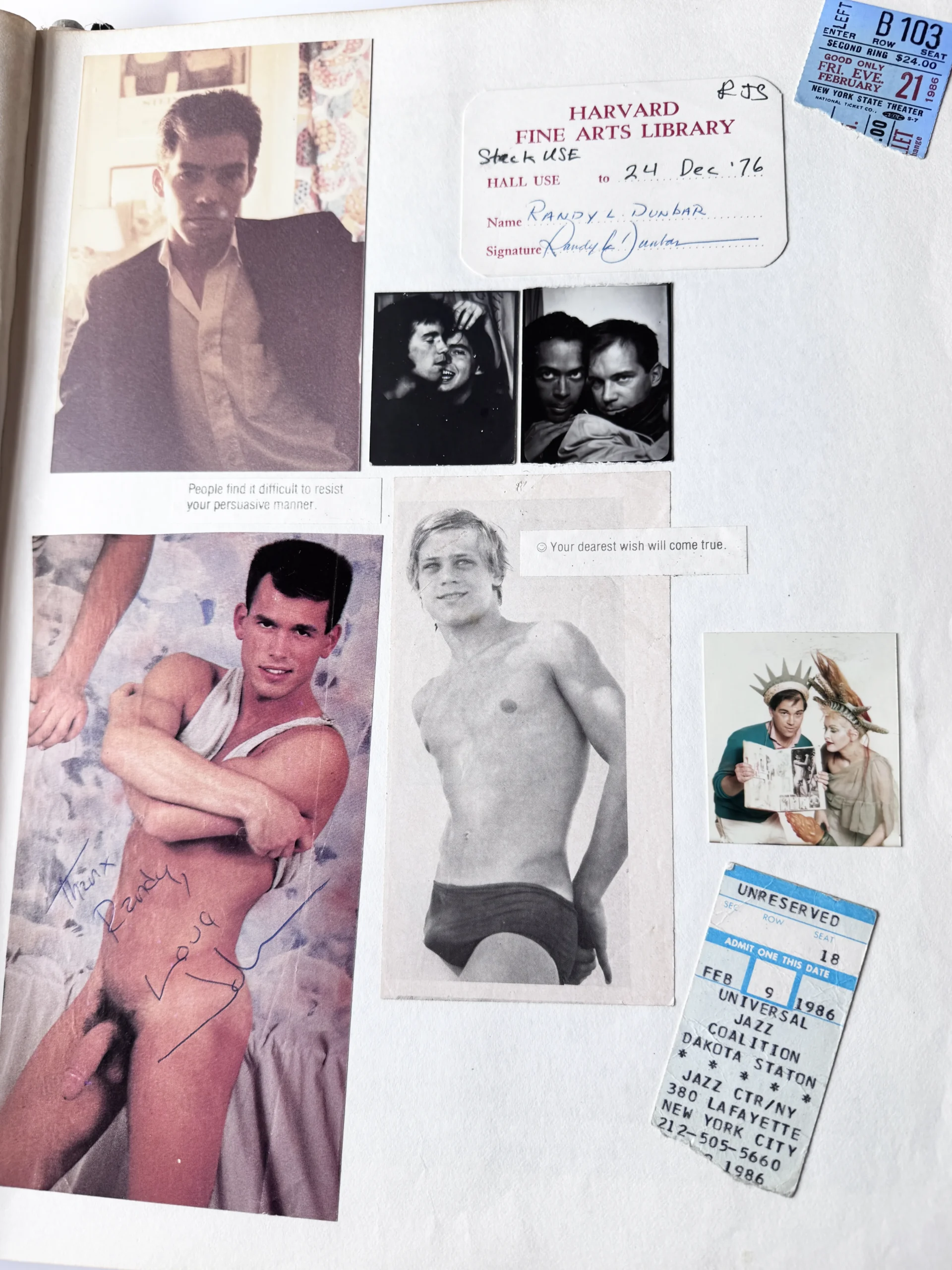
So often, the journal was random. Things store would be pasted. On the bottom right is Cyndi Lauper from a photoshoot, holding her own book of porn.
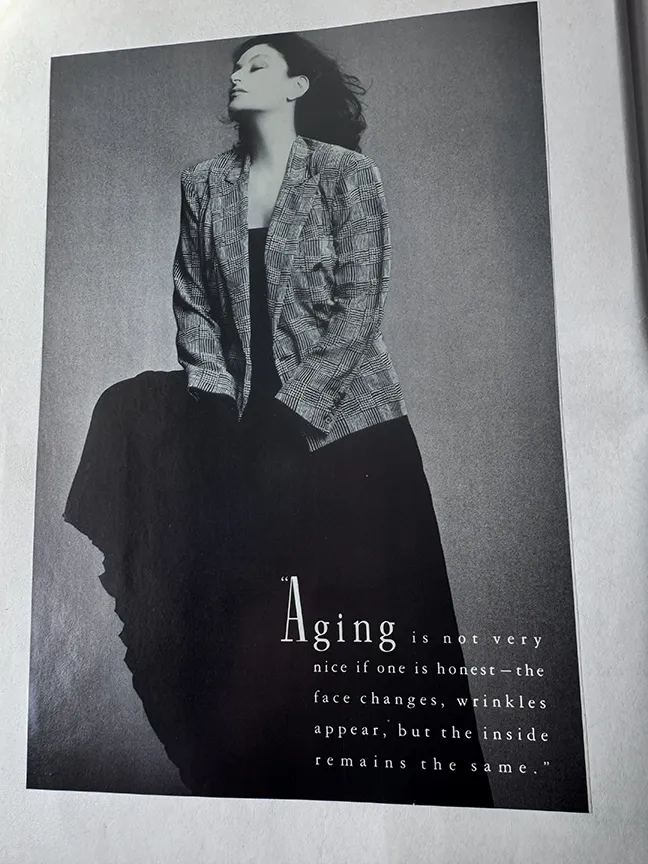
On occasion, images would be pulled from magazines. They were messages.
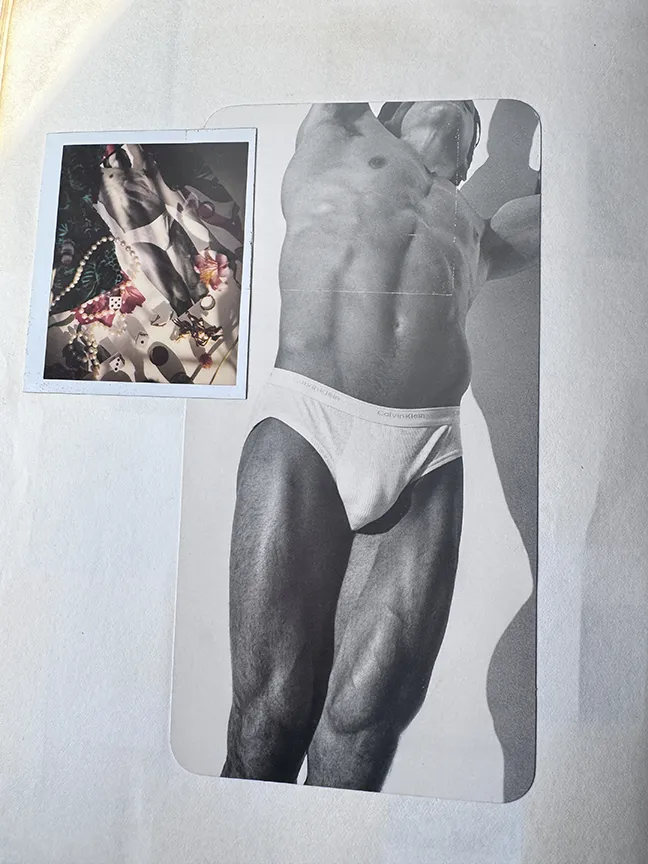
The Polaroid camera was a quick, fun, easy way to see an image. I would create still lives with the Polaroid.
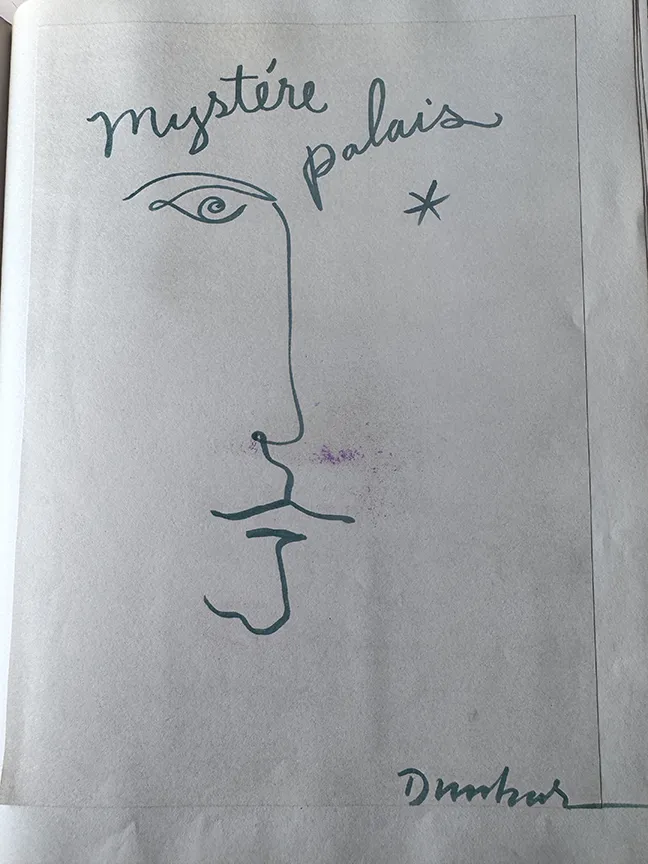
I studied the drawings of Jean Cocteau. I loved the line drawings and his signature. I imitated him often.
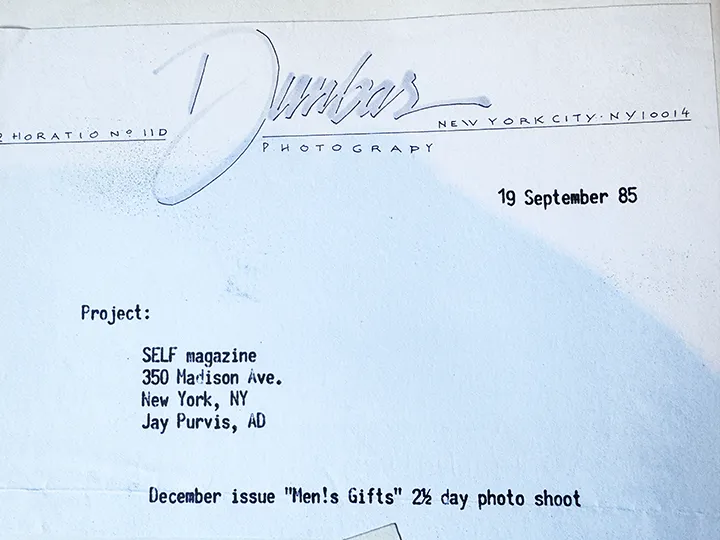
I worked for Self magazine more as a photographer.
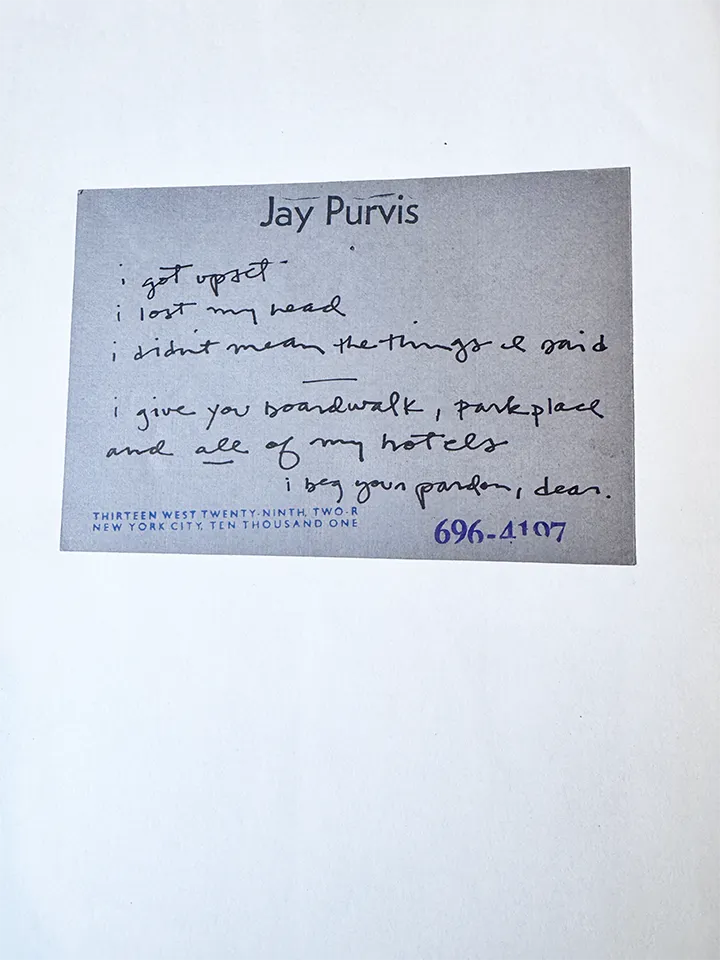
We were playing Monopoly, which is a competitive board game, and I won. Jay Purvis got upset. He later sent me this note quoting heavily from Tom Waits song, I Beg Your Pardon Dear, from the 1982 film, One from the Heart.
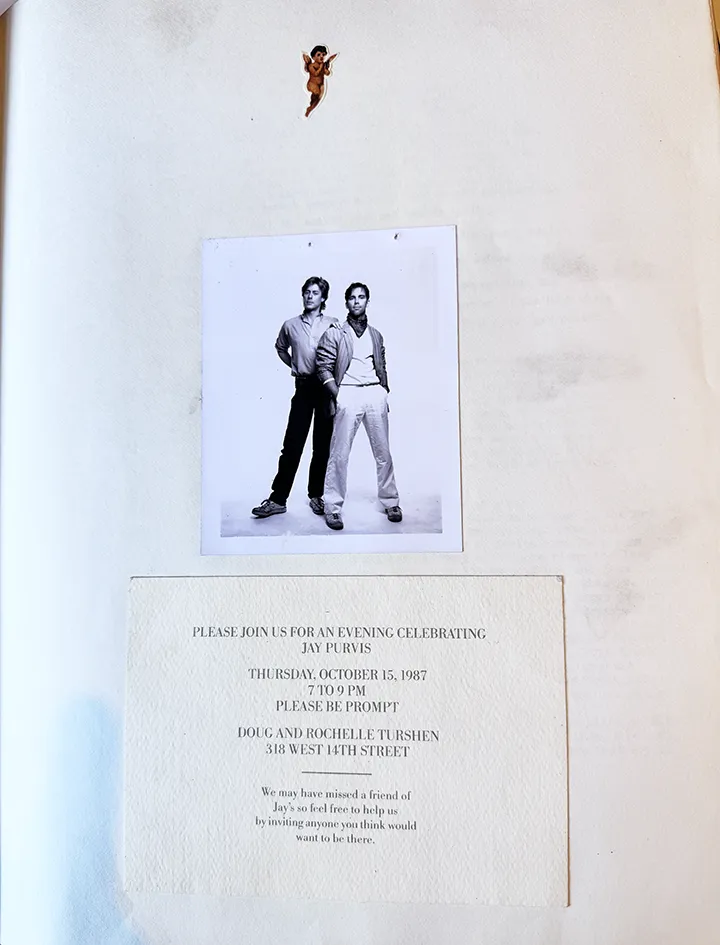
Jay died of AIDS. It was extemely difficult to comprehend, though we had all taken turns tending to him in his illness. New York felt dangerous.
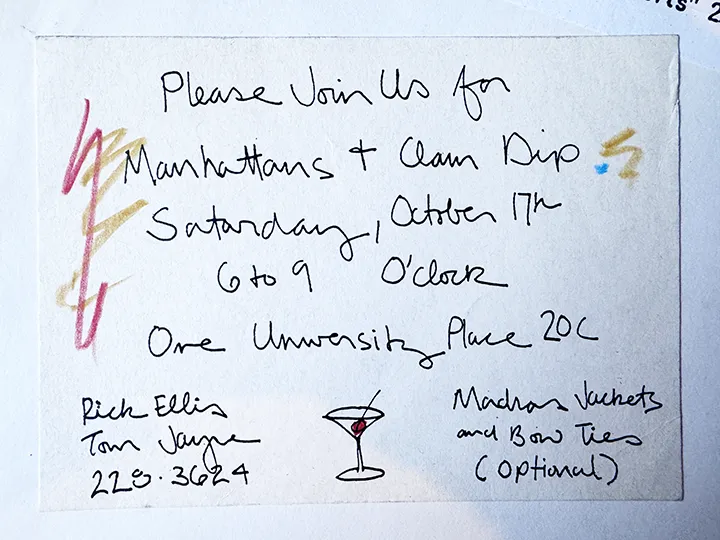
A party invite! One University Place sits at the northwest corner of University Place and East 8th Street, just off Washington Square Park in Greenwich Village, it was a hub of creative types, as as memory fails me, I cannot recall who this invite is from.
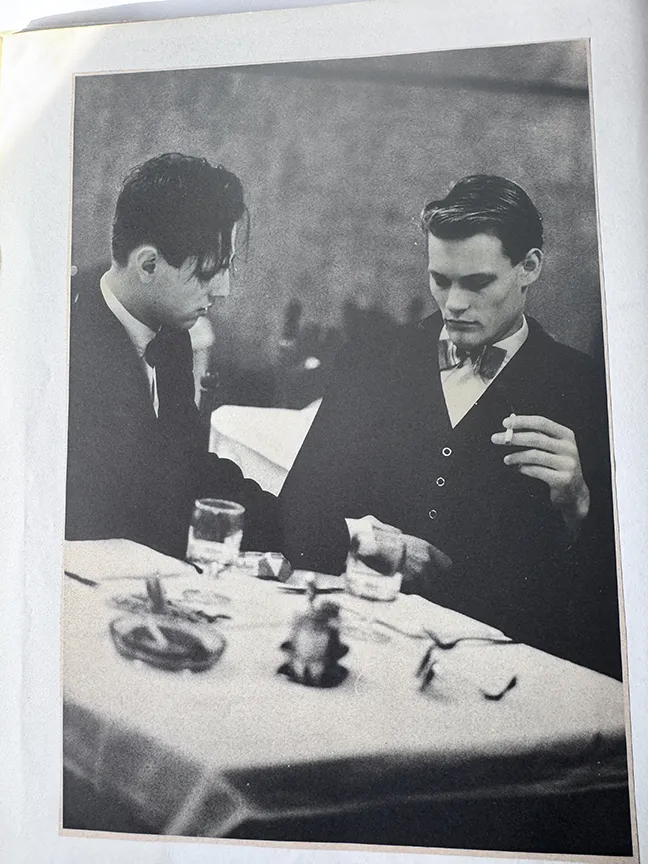
New York was a romantic town to me. Elegantly dressed people at dinner, with love in their eyes.
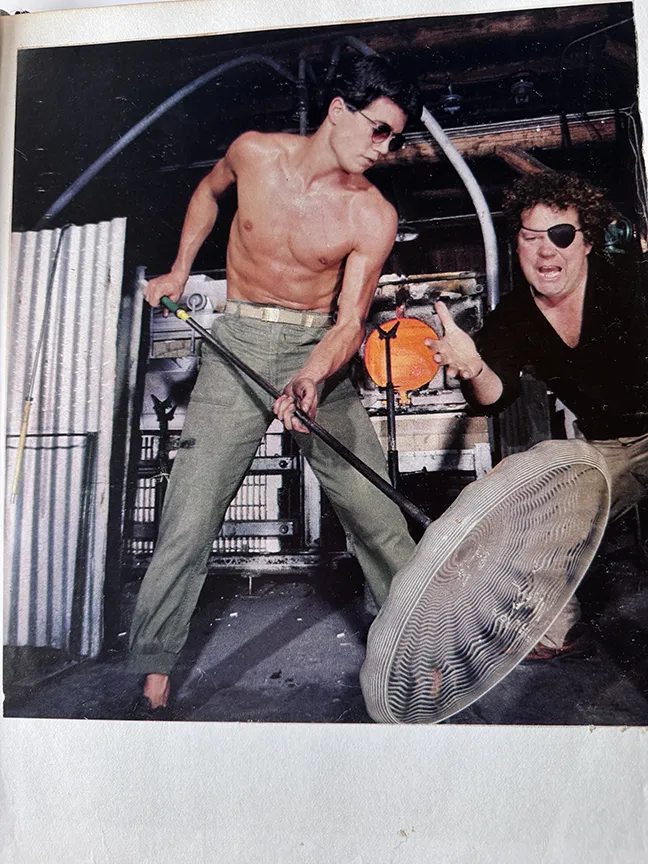
Random images would appear and get pasted in—there was usually some lust behind it.
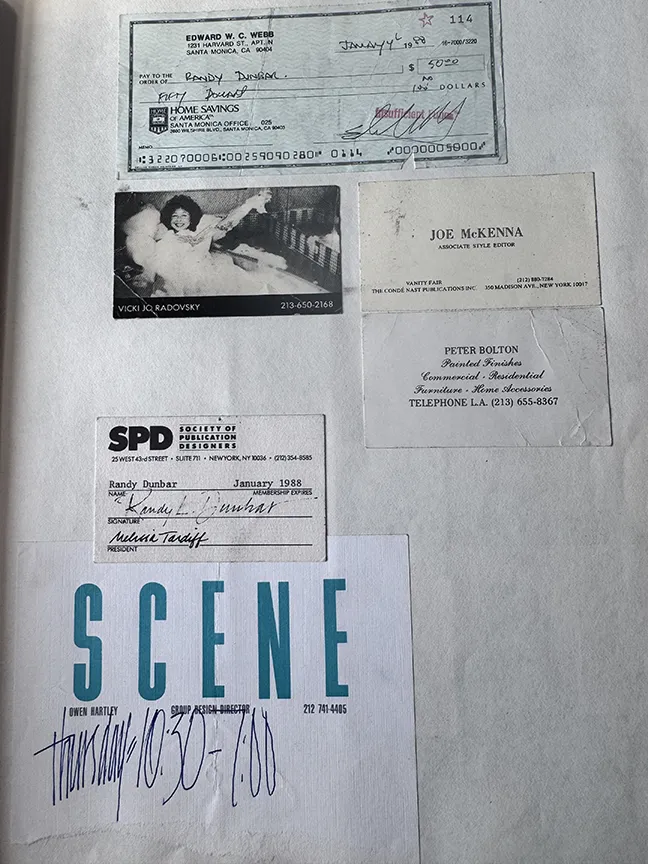
Business cards, appointments, stationery, everything that could be glued.
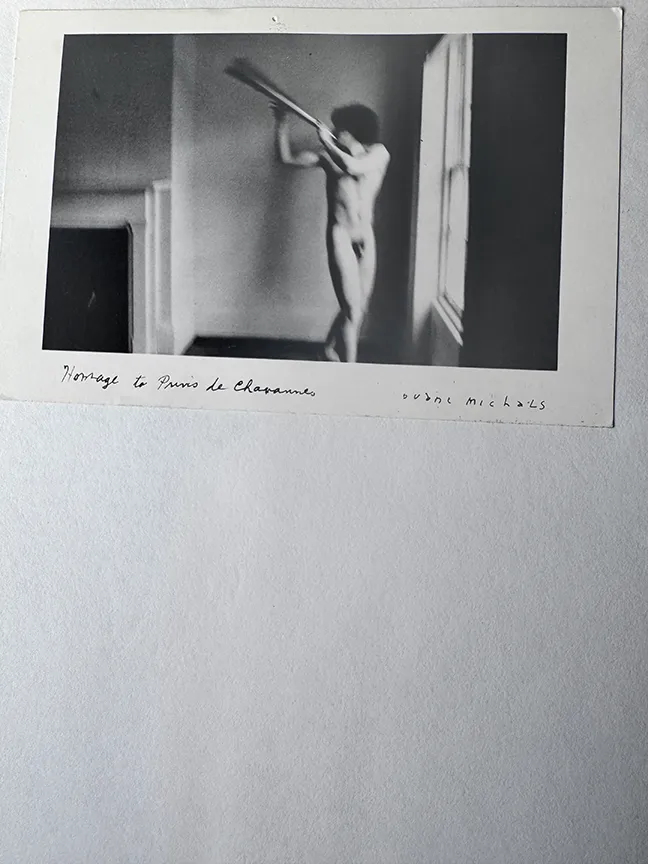
Duane Michals was a big inspiration — that combination of typography and photography was always appealing.
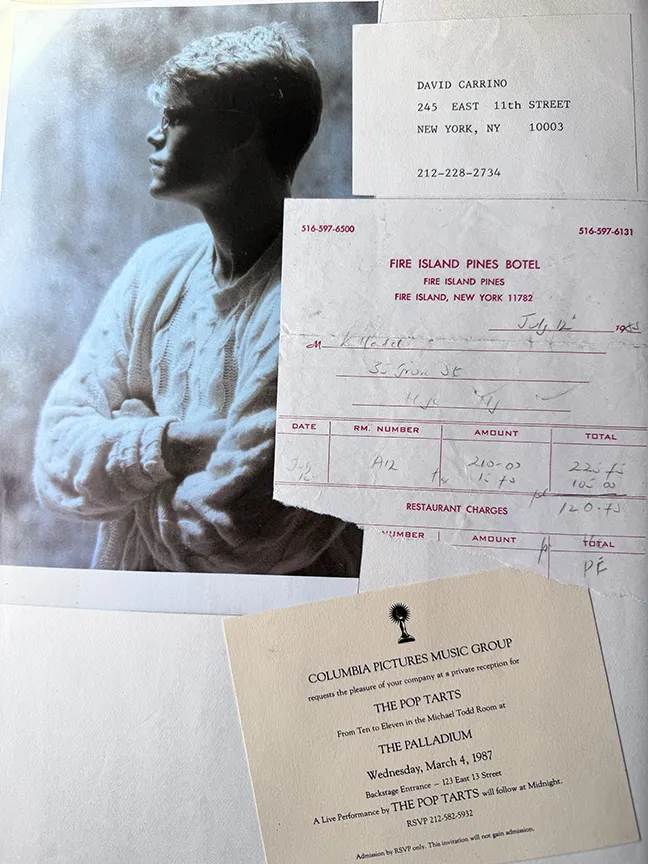
Meeting the artist David Carrino; a stay in the Pines; the Pop Tarts at the Palladium (I think it was the night I met Andy Warhol).
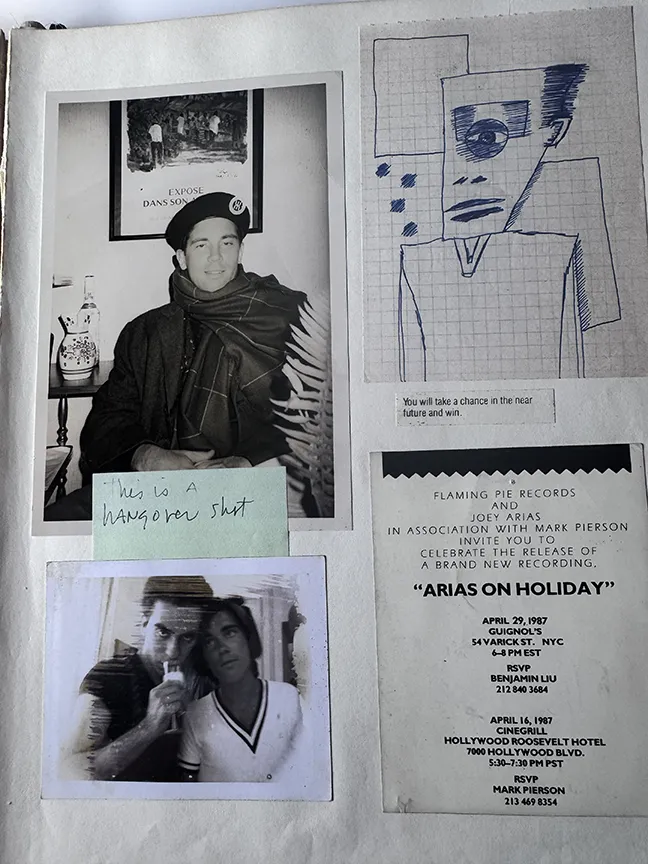
Fortune cookies. Drawings. Legendary downtown performer Joey Arias and I in our youth.
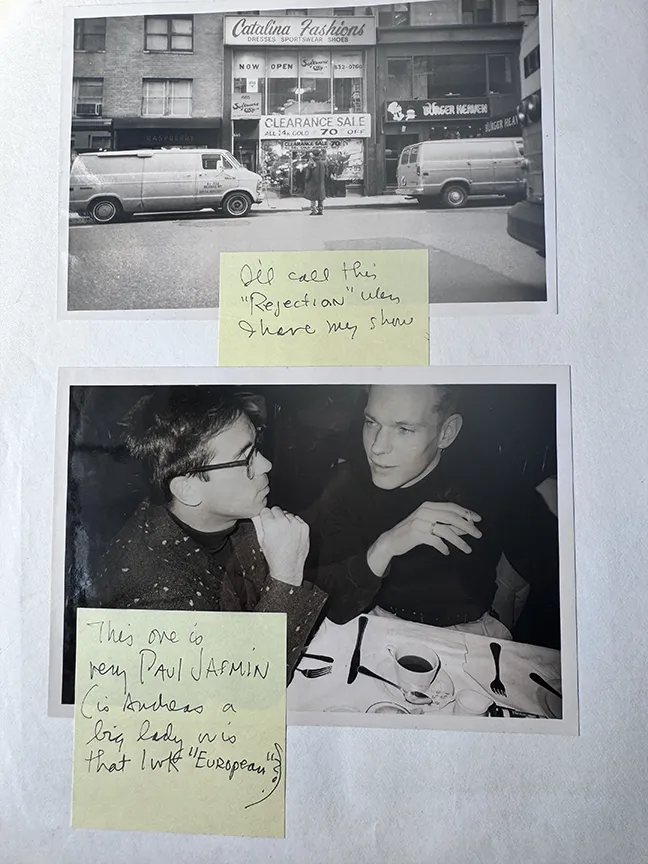
We had been to the movies to see Westler (also known as Westler: East of the Wall). A tall German boy seemed infatuated with me. I patiently listened.
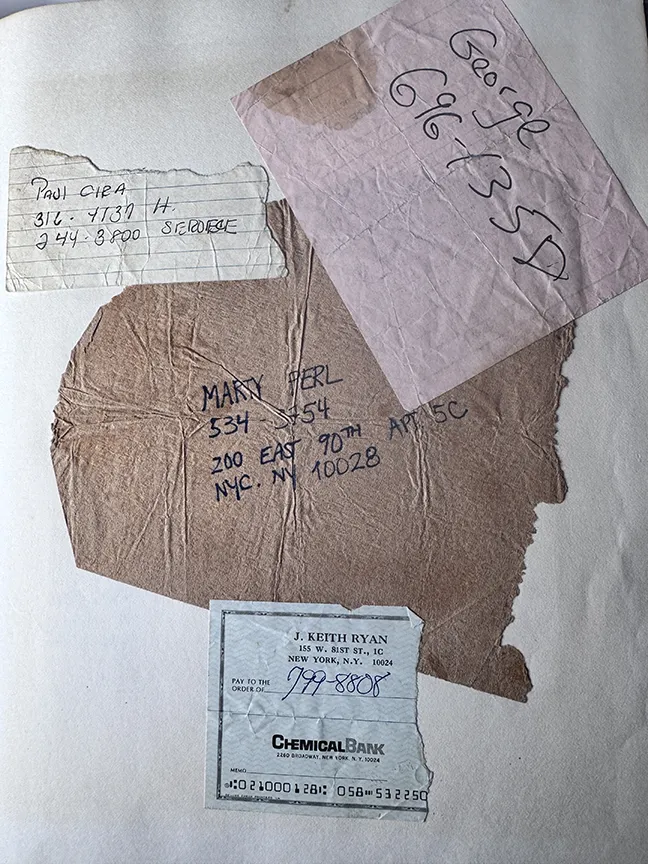
Scraps of memory. Once in a while I would look up these people. I think they may all be gone.
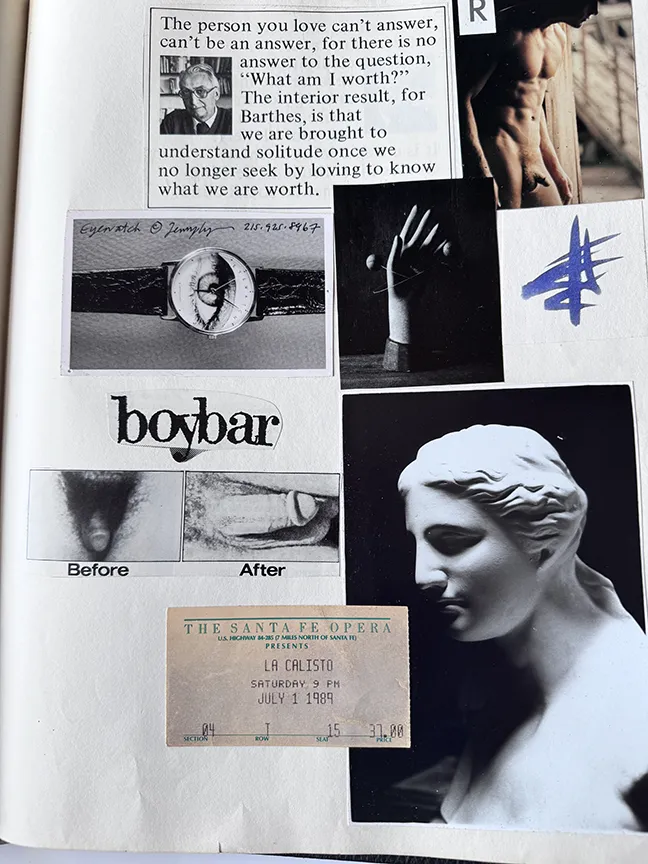
A quote from Roland Barthes, a watch by photographer Jenny Lynn, a visit to an outside opera in Santa Fe.
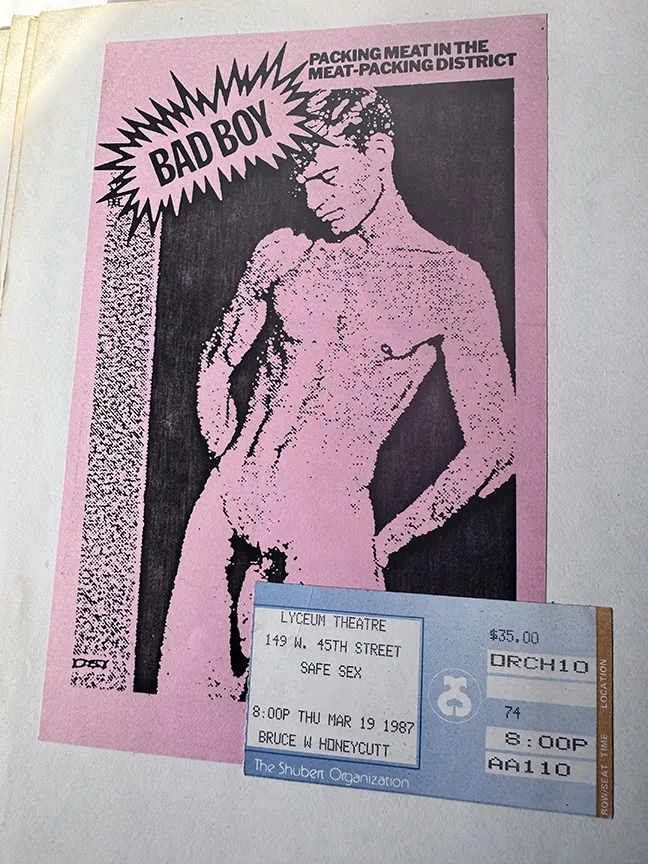
If New York was romantic it was also the most sexual of cities. Being close the meat district, visits to the local dance bars was required. Only once did I go to the infamous Piers on the west side. Dark, brittle, moody as a dark cloud, it had a menacing, the piers were for the exhibitionists.
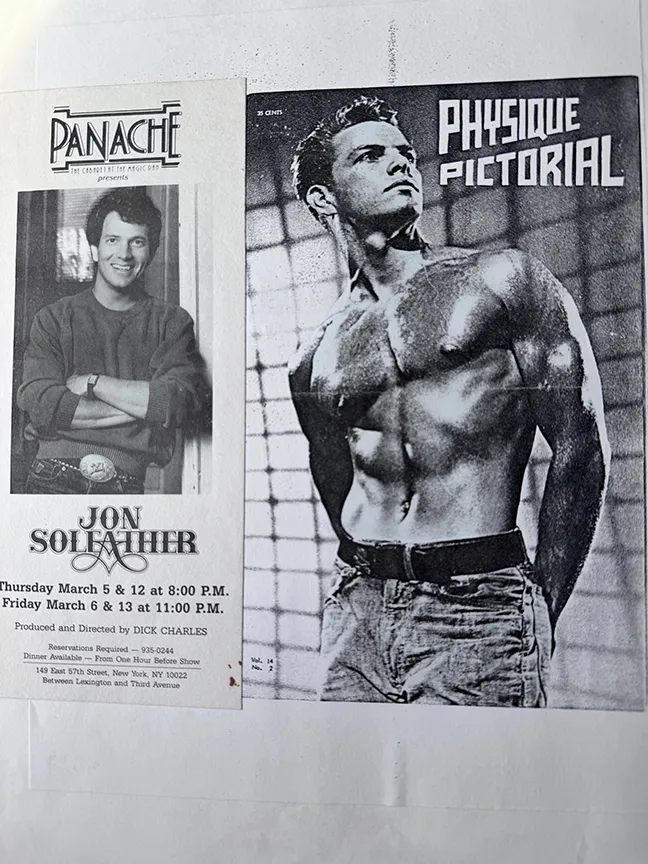
Juxtaposition: I have no idea why Jon Soleleather ended up next to bare chested man. I looked up Jon so many times, only to never find him. Maybe that wasn't his real name.
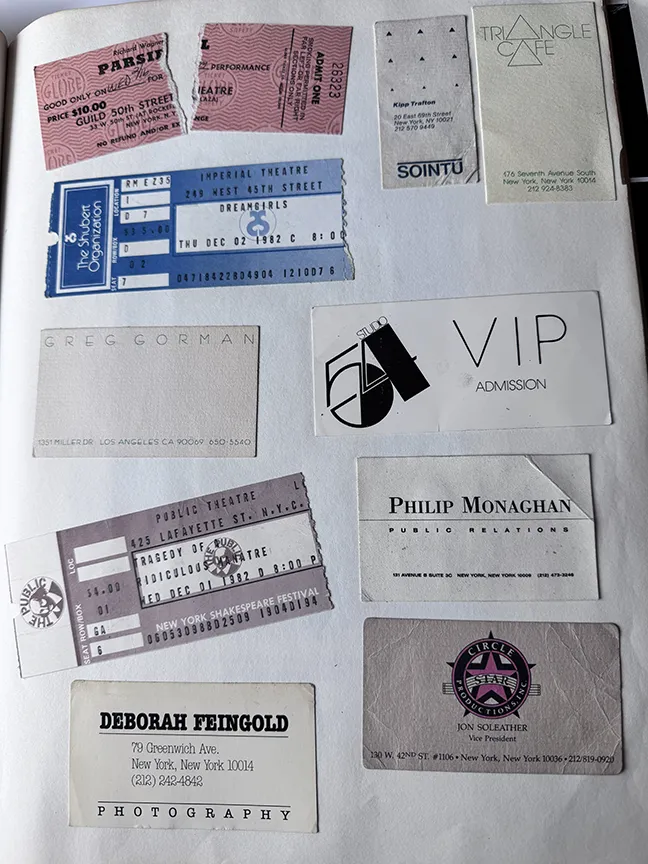
Card and tickets. Of note — Kipp Trafton, owned a store called Sointu. I met him at bar and went home to his loft in midtown. An extremely large loft with a creek running through it. He was beautiful. He died in 1987.
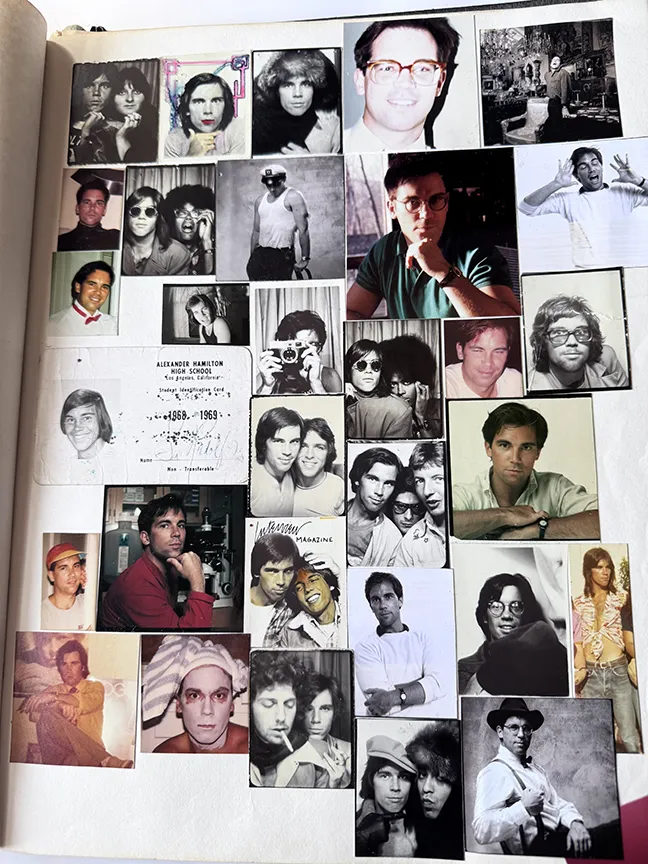
Collage: I loved photobooth images. From high school on, whenever available, I took them. In this collage, it's all about me, with friends and lovers.
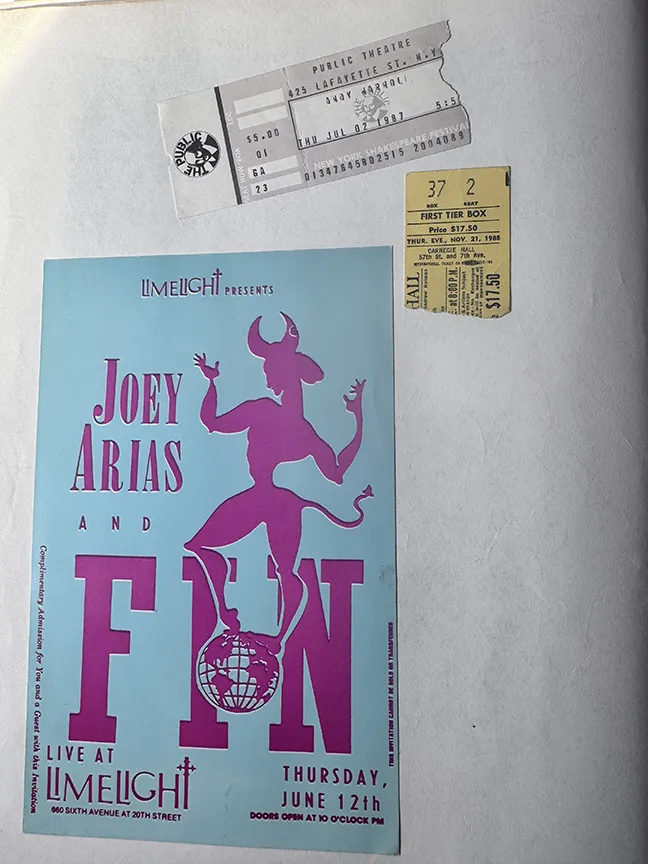
Often I designed things for Joey Arias, posters, album covers. Always fun.
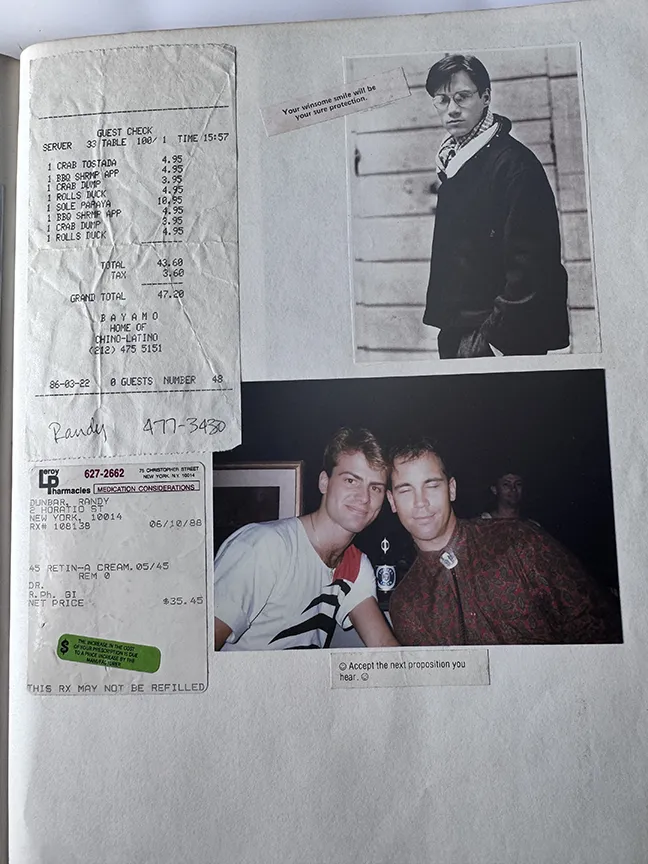
Boys with glasses. Fortune cookies, a guest check and Retin A cream.
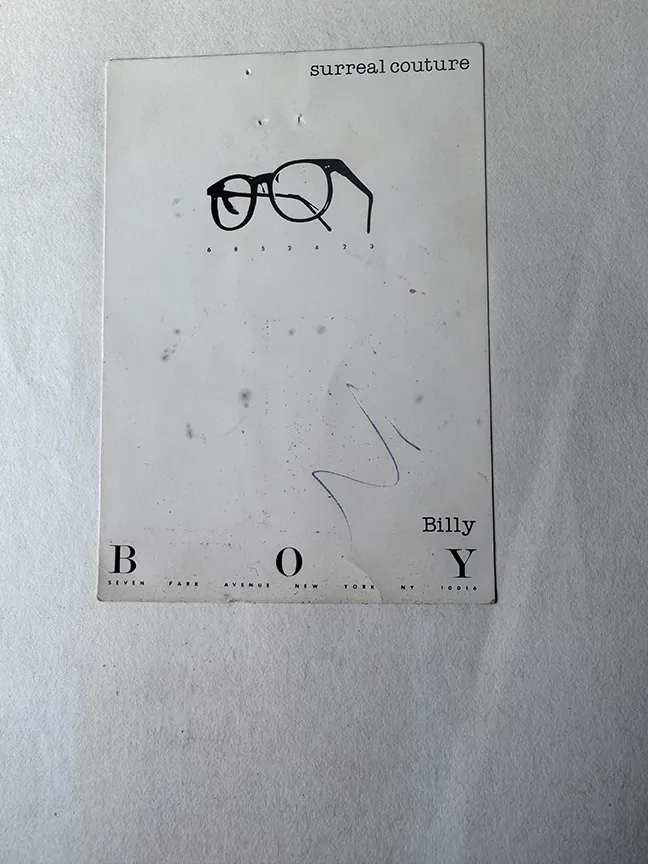
Billy Boy was an is an American artist, socialite and fashion designer. Considered a muse for Andy Warhol (who wasn't?) is also a rabid collector of Barbie Dolls, with over 11,000 of them. We ran into him often. Tall, nerdy, his glasses were his trademark (and probably still are). He lived somewhere in Paris now.
I could have danced all night, he sighed as the last subway pushed us back toward home.
It was wonderful just to watch him at these moments, when a child peered out from his face and made his presence known. It wasn’t always there, and when this image did occur, it was necessary to seize the opportunity, to take his hand and tell him, “soon, soon.”
Cort liked his dancing, and he could dance all night if I wasn’t the sort of person who perpetually put an end to festivities and called it quits, apparently when the night was just beginning.
I suppose I was the voice of reason, that curious beacon in the night that signals to those who see that the morning was nearing, that soon our dusty jobs would be awaiting and the fresh silver of water would spray our faces in half-hearted attempts to wake from this dream. These nights with Cort were always exciting, in a way they had never been for me before.
Cort brought to the night a certain element of trust that all things would work out, that the clothes we wore would make sense, that we would be fashion-correct in a city teeming with models and fashion photographers who would have an eye for such things. I did not, and secretly wished that I could don my tired blue jeans and pass into a gleeful oblivion of attractions. Cort, sartorially streamlined, would pass from one nightclub to the next, grasping my hand as we pushed ourselves past the throngs of eagerly awaiting people who wanted inside. We strode in like princes, Cort with some destination in mind, driven by music and a fervent desire to dance.
How it ended with Cort was nearly as improbable as how we met. I was waiting for an uptown bus on a rainy November day when a body slammed against mine, forcing me to fall backward.
Before I could utter the instinctive foul responses, I was seized by his face and his hand as he reached down to pull me up. It was that look, at that instant, that I knew I had met someone unique, probably much too young and energetic, but crisp with fascination and a pair of eyes that could level mountains. Why he was rushing so madly, why he ran into me with such force, was never answered. Only after ten minutes of our sitting on the bus together did I realize that I had forgotten all the moments prior — indeed, seemingly my entire life before.
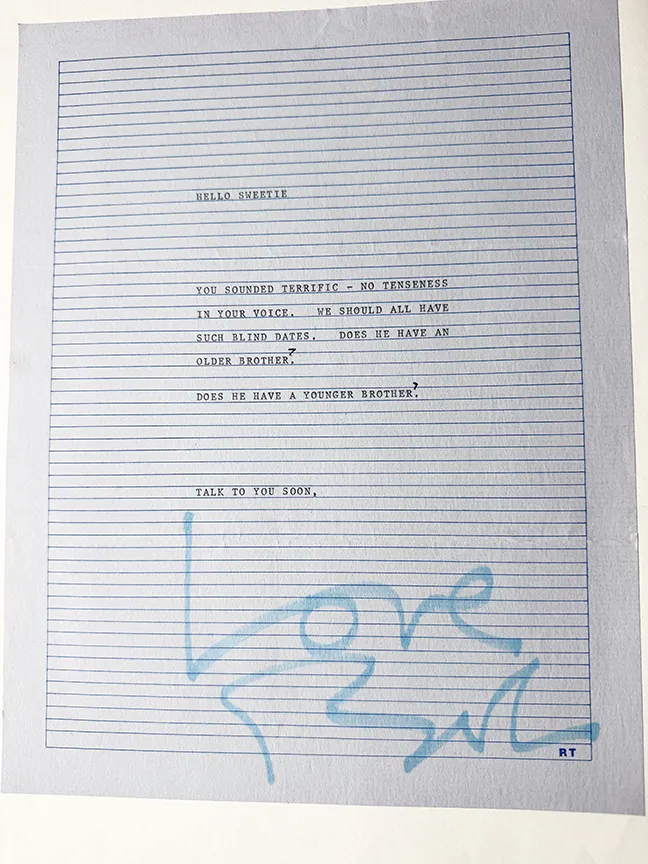
A note from Robert Thornton. Robert was an art director at the same company I worked for. We didn't get on at first, but in time, we had breakfast every Saturday morning. He was older, around in the 1970s and he had stories, I listened.
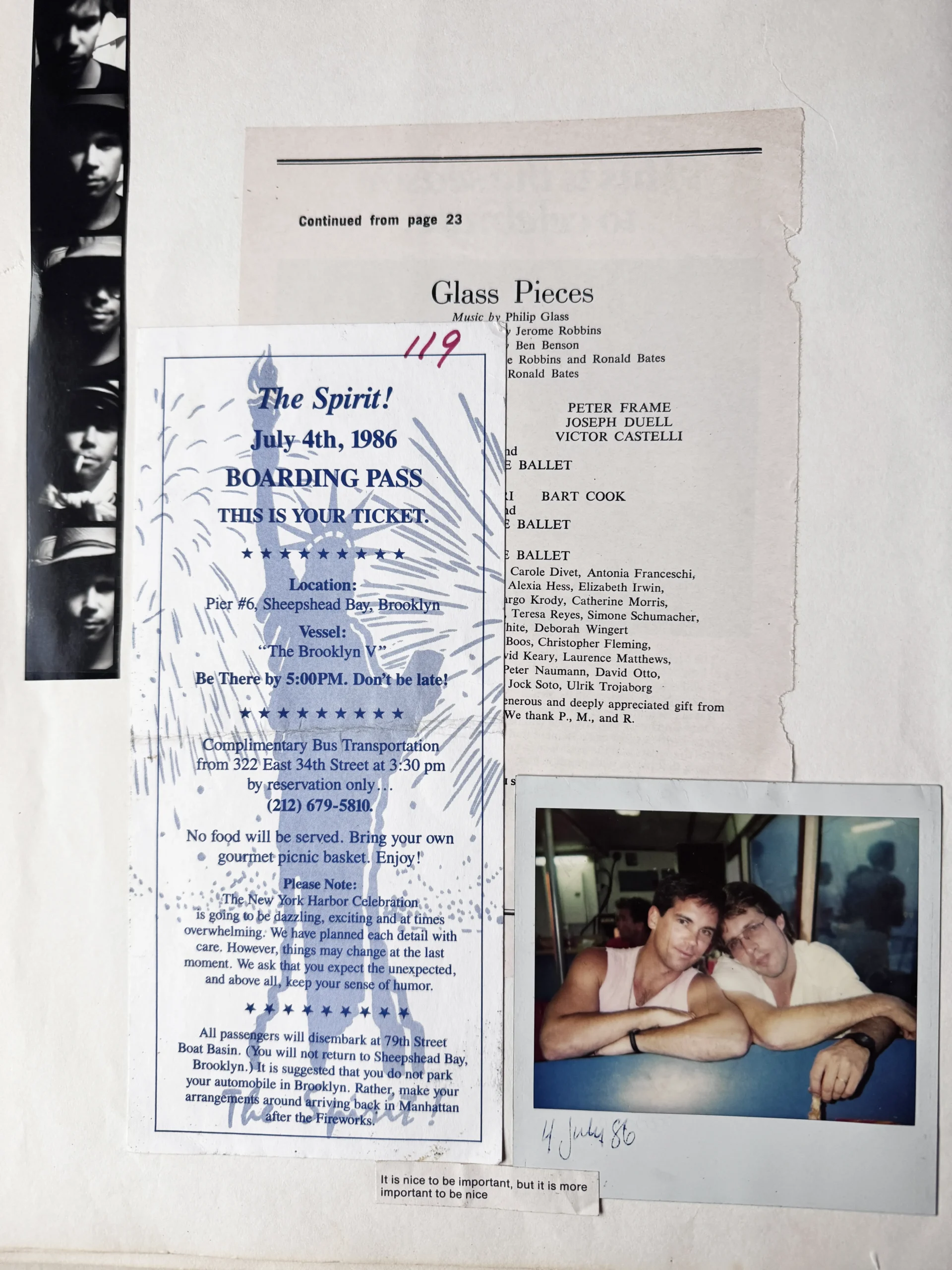
July 4th, 1986. My friend Jonathan was visiting. I got us a ticket to be in the harbor for the 4th. Jonathan was like a sexy Richard Gere. He later developed AIDS, but even with his face covered in KS, he came to the gym.
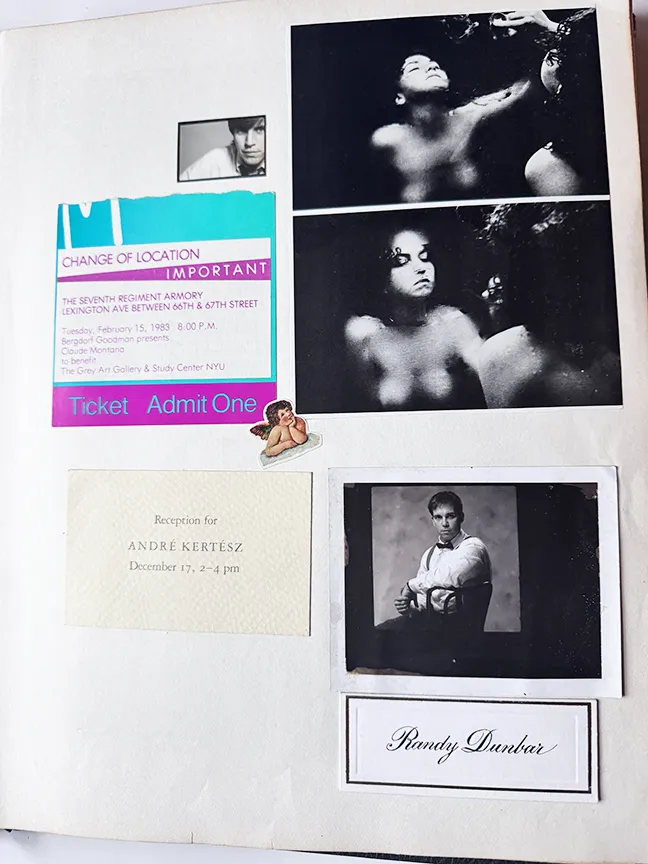
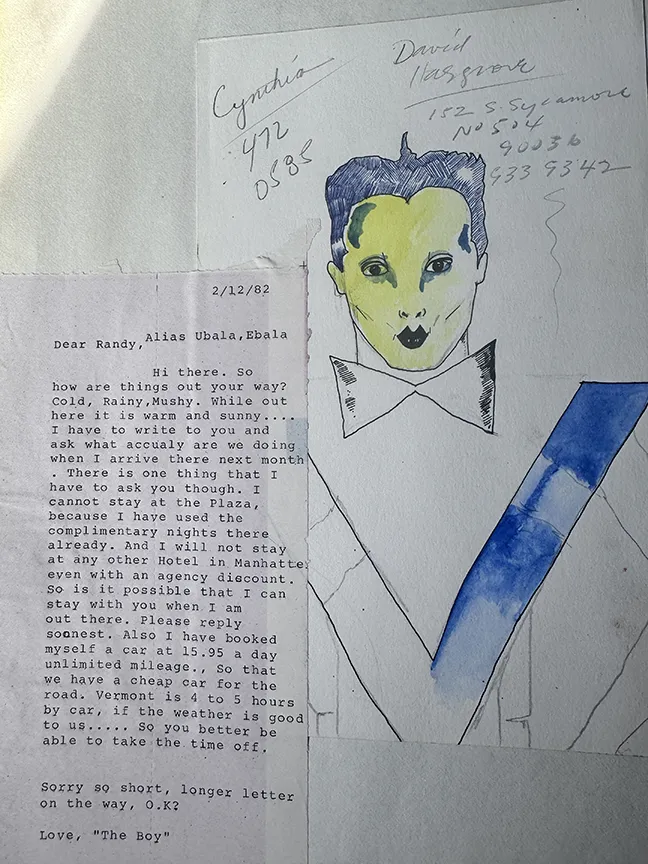
A fashion show, an opening for André Kertész, a portrait of photographer David Hartman. I used David on most of magazine covers—he knew all of the up and coming model of the 80s in NYC, and why not? He was after all, legendary photographer Bill Kings' boyfriend.
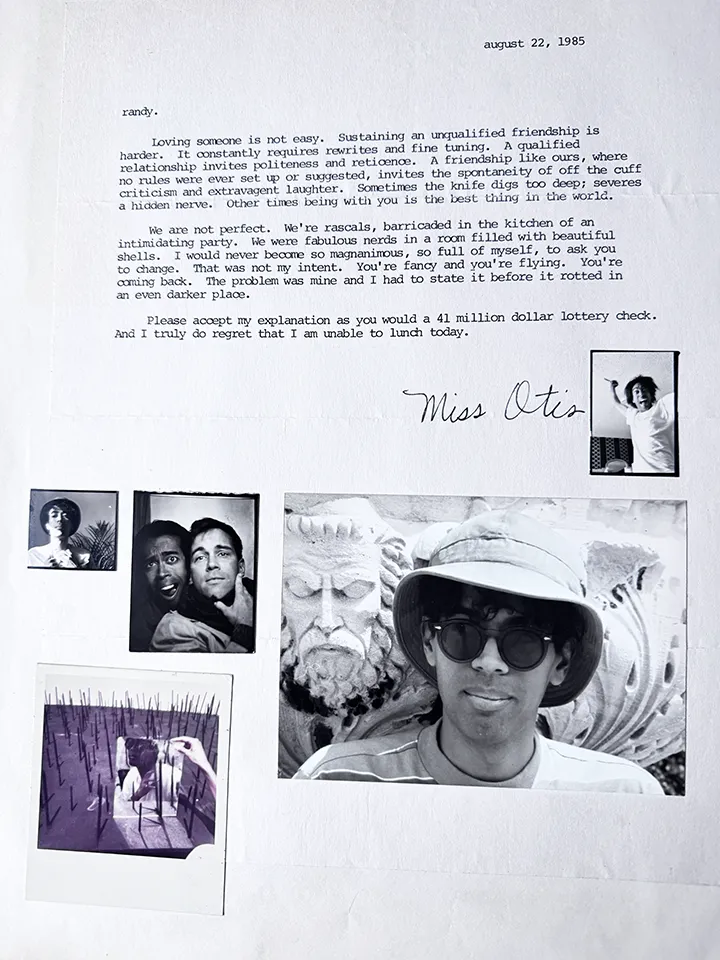
Old friend. For over 50 years we have exchanged poems, photographs, songs and letters. In those 50 years we have had a falling out maybe twice, over what I cannot recall. He was the reason I moved to New York City. One of the smartest, most talented people I have had the luxury of knowing.
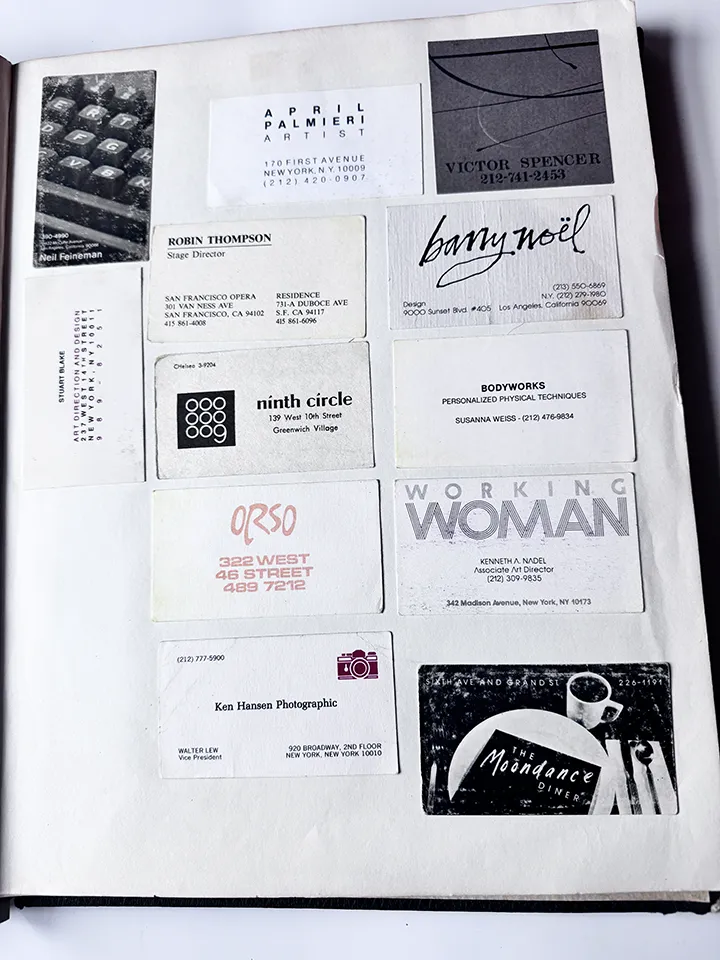
If I met you and kept you business card, I pasted it. A wildly random selection.
If I met you and kept you business card, I pasted it. A wildly random selection.
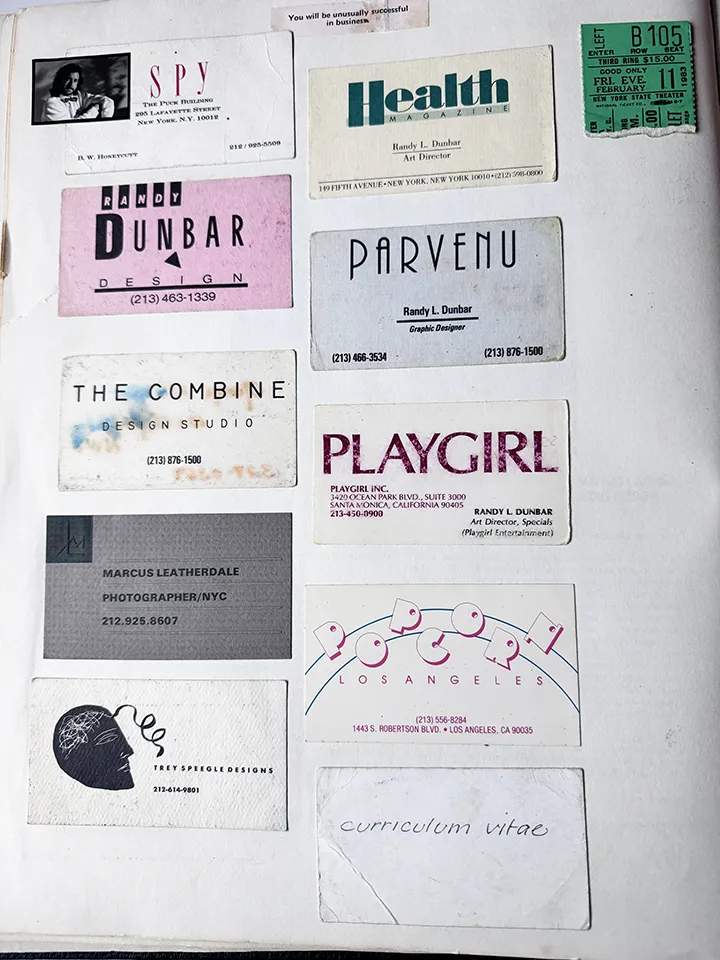
Of note here: BW Honeycutt was the art director of Spy magazine, as well as Details, and later Vanity Fair. He was the most gracious, authentic person. He made New York City fashionable and fun. He would die of AIDS.
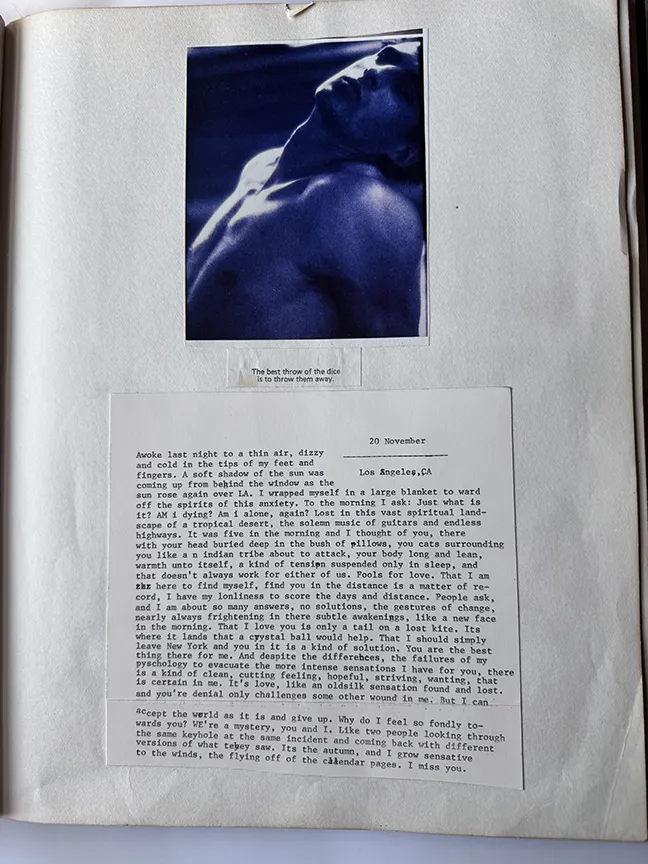
A note written in LA.I'm not certain to whom.
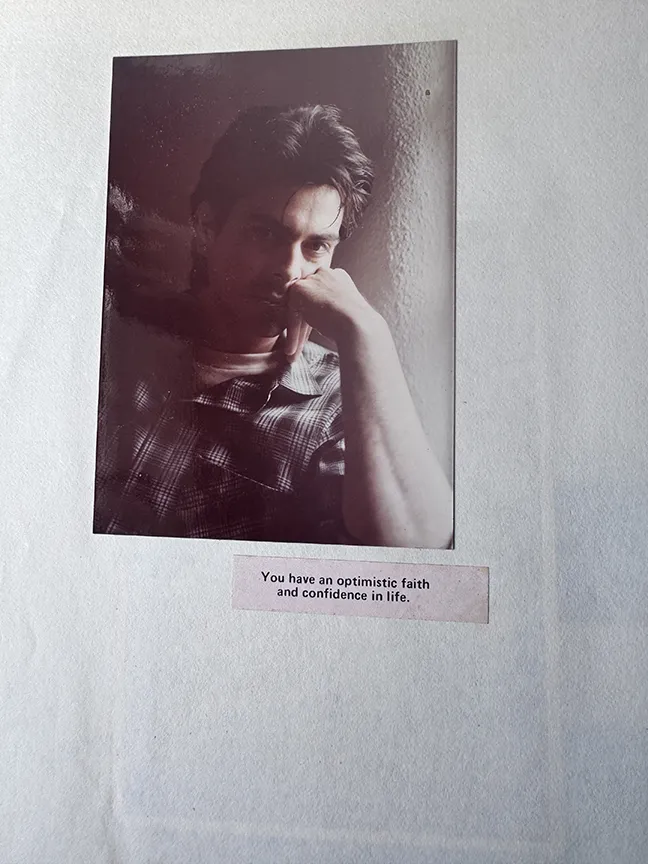
John Michael Ries. We met in college and quickly became great friends. He was tall, dark and extremely handsome. People would swoon over him. We traveled to Europe. We traveled to San Francisco, New York. I learned so much from him. I left New York partially to get away from so much death, only to come back to Los Angeles find John had AIDS and was dying. Nearly everyday I want to call him.
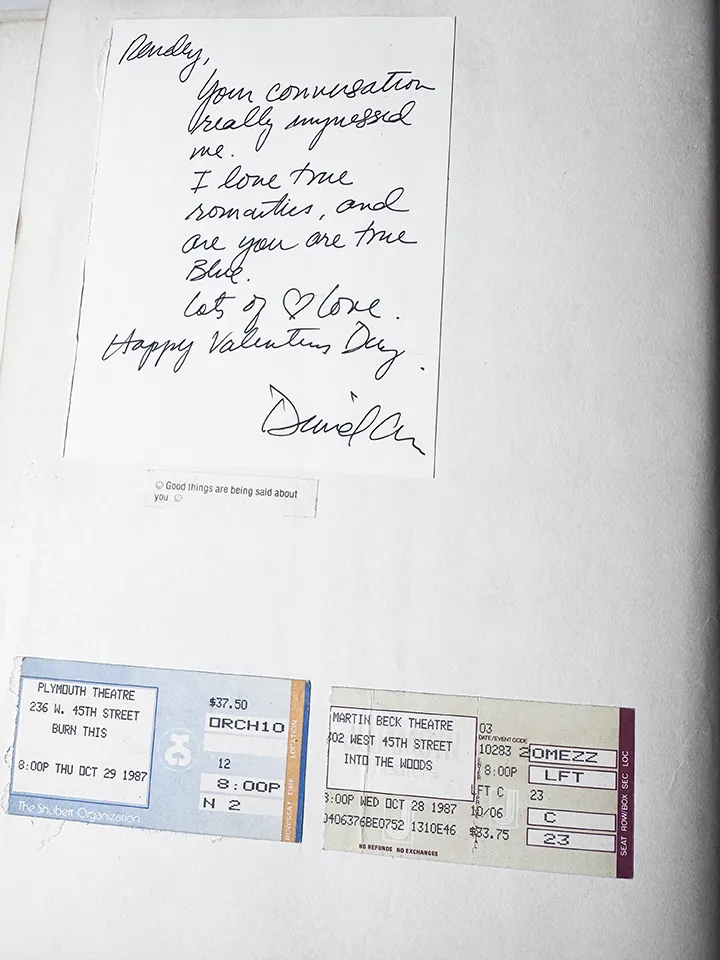
Theatre tickets and kind notes.
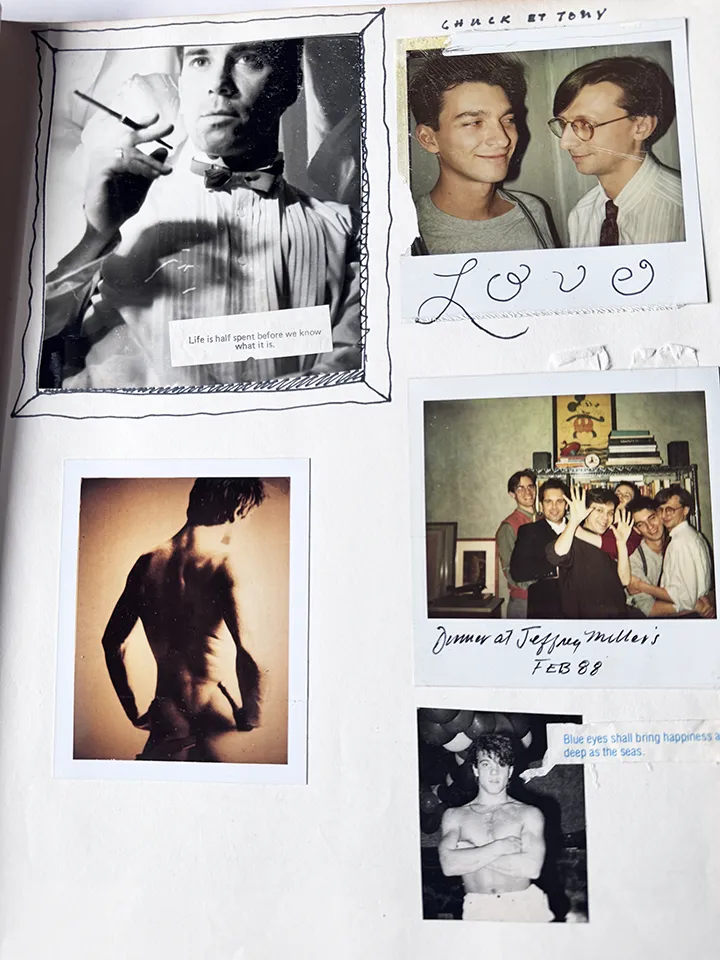
Dinner parties in New York were special. I loved them. Dinner at stylist Jeffrey Miller's apartment. I think everyone had a boyfriend.
Jay Purvis. He loved polaroids. He loved designing. He was the art director of GQ and Self. He had me model for GQ and a book on hair styling with his friend George. He had a crush on me. He would call late at night to go out to nightclub. "I'm your boss." he would say if I even thought about saying no. He and BW were from Chapel Hill, North Carolina. BW was in love with Jay.
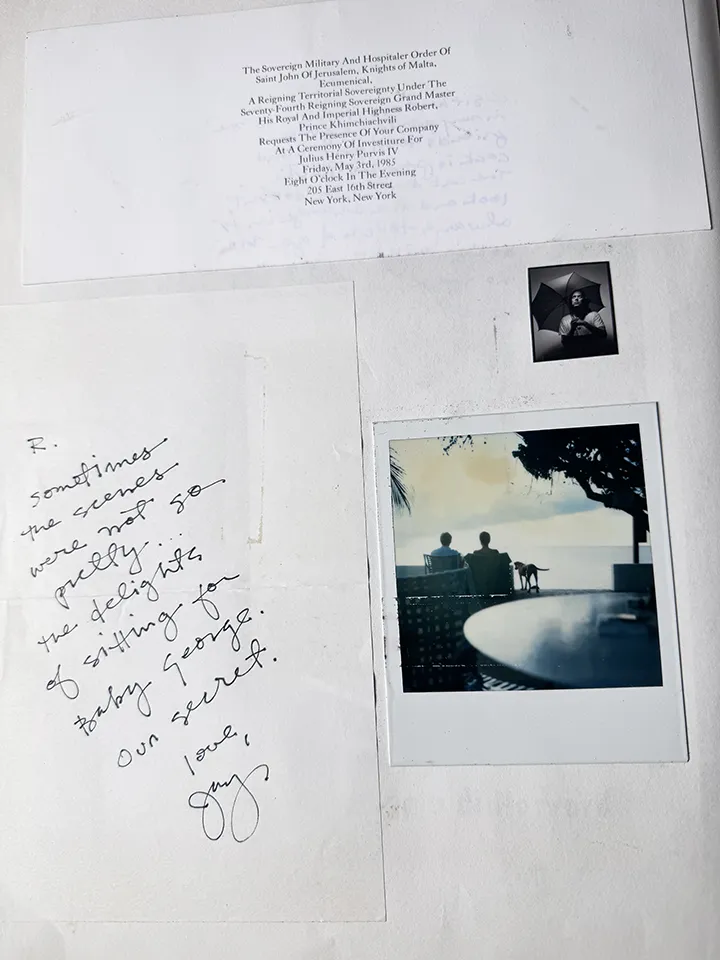
Jay and George. Not always an easy friendship. They both succumbed to AIDS.
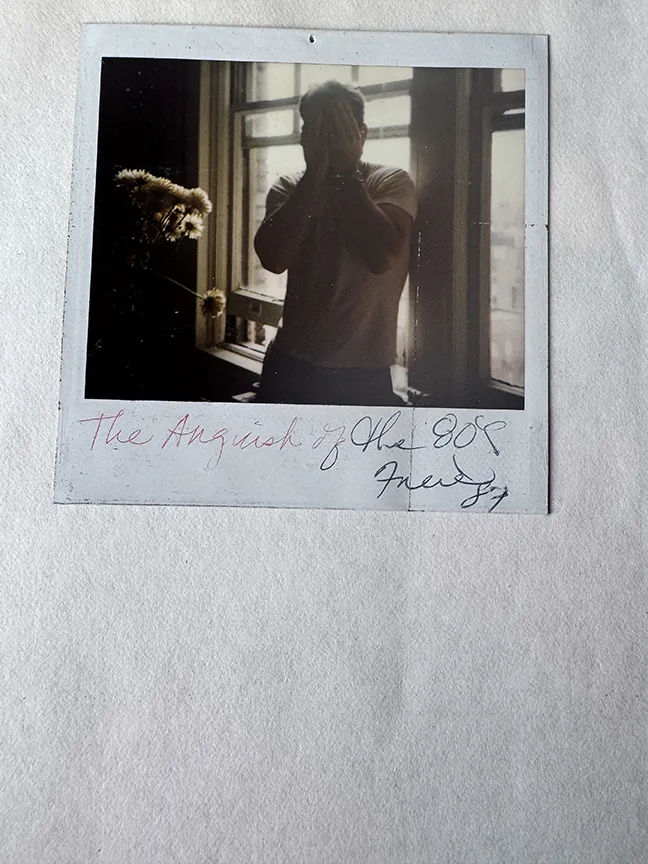
By 1988, I was ready to leave New York.
I had regrets, but the city had turned into a paranoid nightmare—hospital visits, lessons in safe sex, marches, and a constant, low-grade worry that never quite left. To witness all of that in your thirties was to put a lid on your emotions. There was only so much one could absorb before something inside quietly sealed itself off.
The studio apartment began to feel smaller. The partial view of the river lost its romance. Even the light seemed different.
When Andy Warhol died, it felt symbolic—like the end of an era. A curtain coming down. What I didn’t yet realize was that it marked the conclusion of something more personal.
It turned out to be the end of my New York years.