
Confessions of a Gay Art Director
I’ve been part of the LGBTQ+ media world for a long while, shaping its look, feel, and voice. Over the years, I’ve art directed and creative directed some of its most influential publications: The Advocate, OUT, Genre, Hero, and IN magazine.
Sometimes that work meant stepping into an established publication, taking over the reins and honoring its legacy—like with The Advocate. Other times, it meant building from the ground up, designing every detail from scratch for a new “start-up” magazine.
Each title comes with its own history, its stories, its gossip—and its mythology. What follows is my side of the story.
As one can imagine there are stories to be told and the time has come to tell them. But first, just what is a magazine art director? A magazine AD was the person who put the art and words together to create a style for the magazine that became its brand. It was the "look" of the publication and to do that AD's would hire photographers and illustrators to complete the writing of the story.
A funny thing about time is how it often distorts the truth. Memories are made solely in the mind, of one person, and other people can see things differently. And often do. But these are my recollections—this is how I remember it.
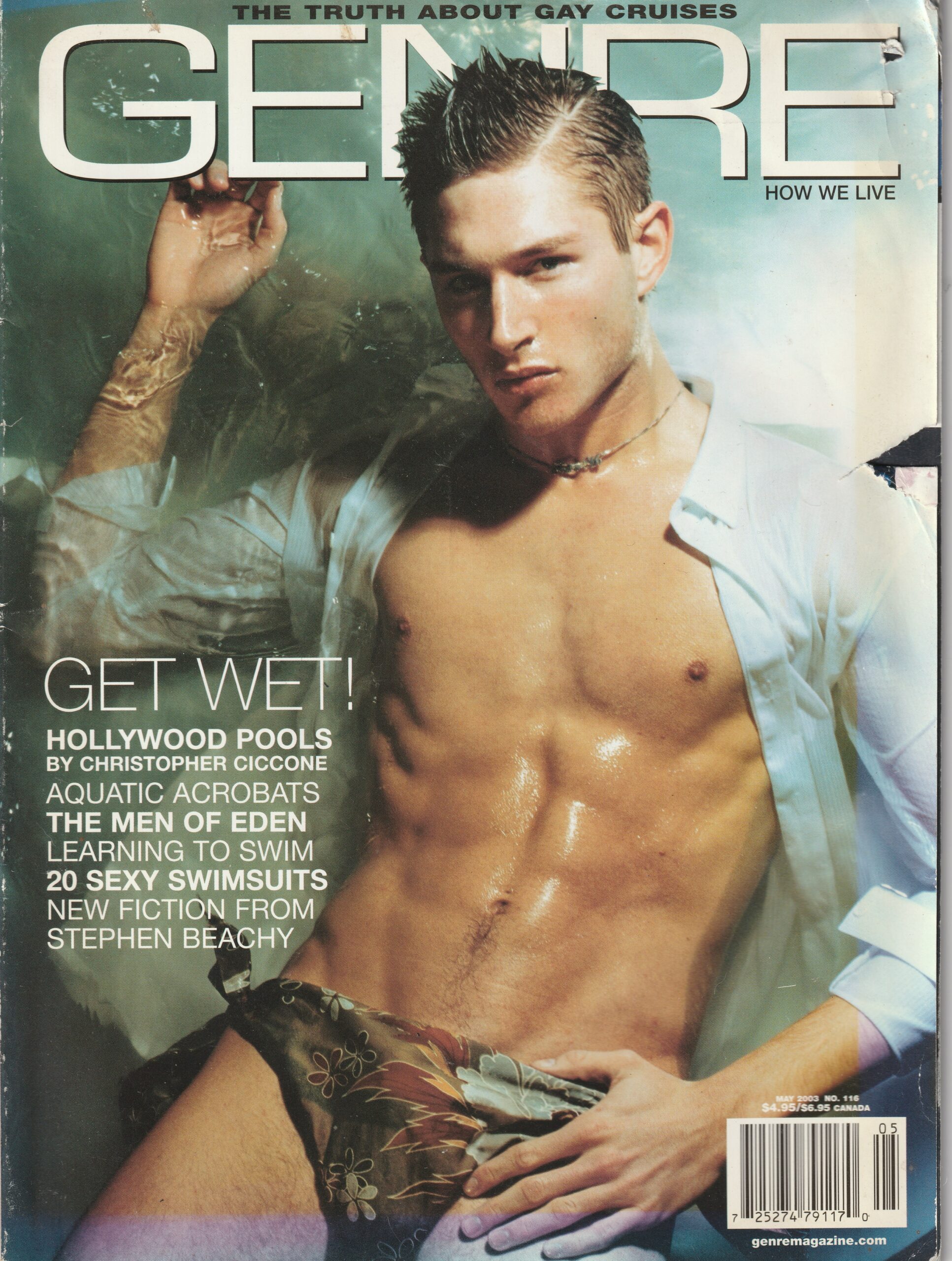
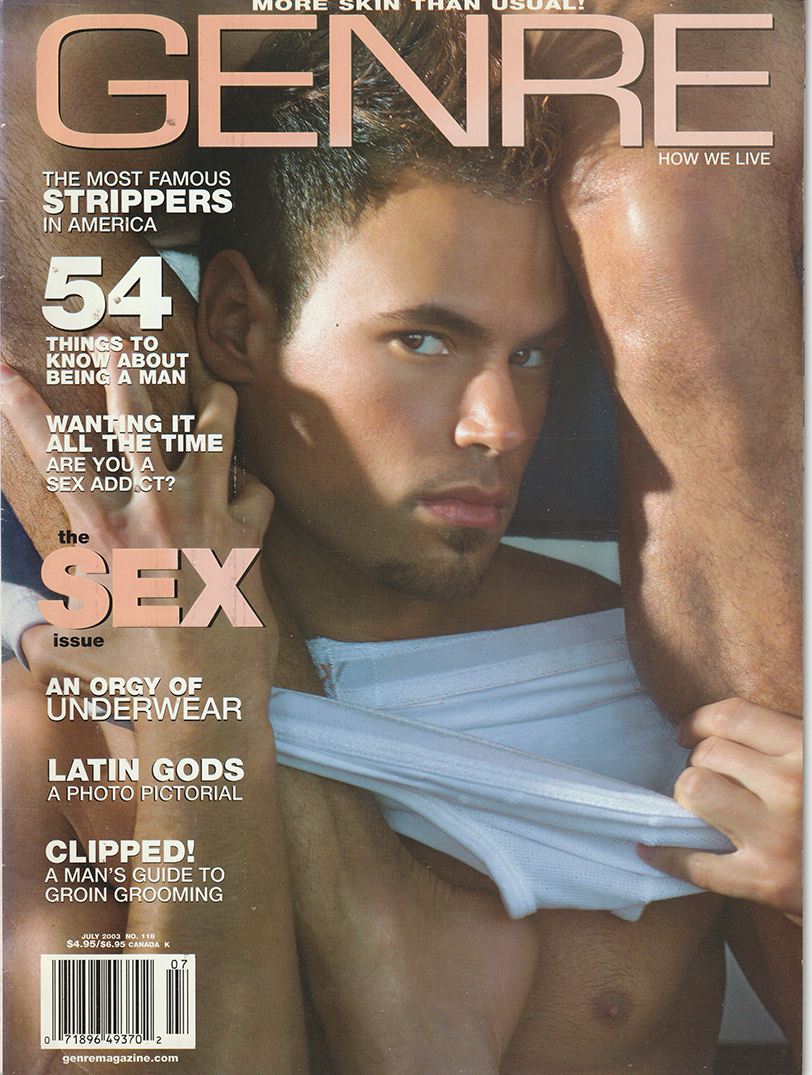
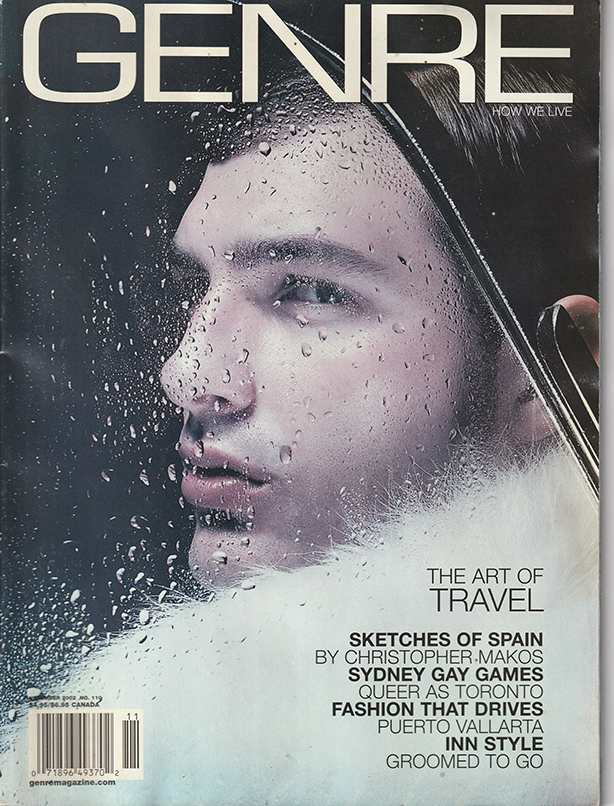
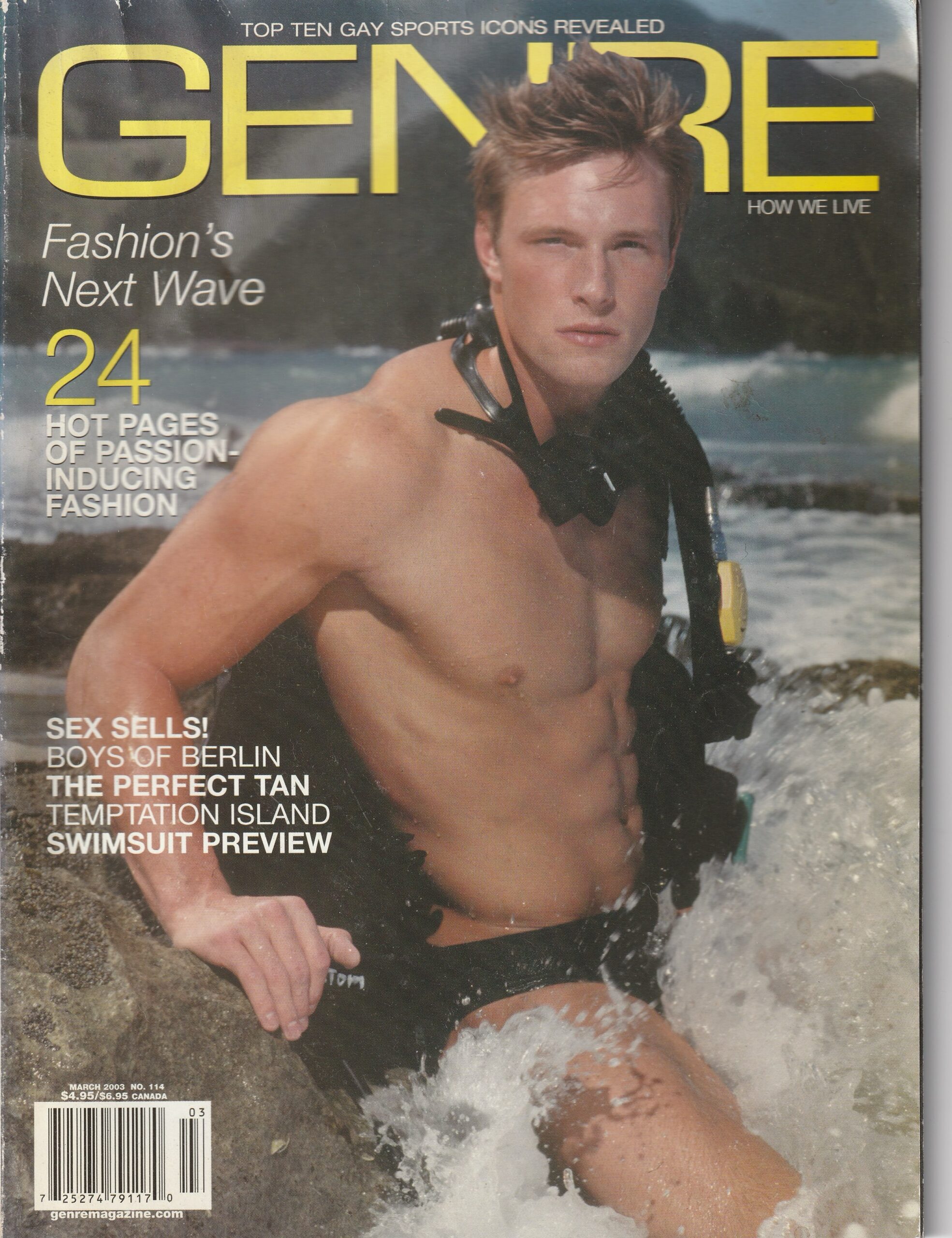
Let's start with Genre magazine: Genre was a prominent gay men's magazine that operated primarily during the 1990s and early 2000s. Founded in 1991 by John Liggins and Michael Turner, it was initially conceived as a lifestyle publication aimed at affluent, style-conscious gay men. Genre was positioned to appeal to a broader, more mainstream audience within the LGBTQ+ community, differentiating itself from other magazines that focused more on adult content or niche audiences. It later brought in Richard Settles as publisher and New York-based co-owner and associate publisher Doug Shingleton.
I was there in 2001, though I had done a few freelance jobs on Genre, working out of Richard Settles's bathroom. But in 2001, we literally walked the old staff out and brought in Andy Towle as Editor-in-Chief, Michael Davis as Creative Director and I remained as Art Director.
The publisher, Richard Settles, was looking to sell the magazine, and his contributions became less and less with time. The trilogy of Towle, Davis, and Dunbar was a powerhouse, for a time.
About the third issue, as we worked into the evening, a sudden screaming and the sound of papers and books flying came from Andy's office. He was not happy. He had essentially cleared his desk. In the room was Michael Davis. They had a fight. It was a few weeks later when Richard Settles called Davis into his office and told him he was no longer employed. After eight issues Davis was let go just as he and Andy were putting together a project of getting Madonna on the cover.
Michael Davis is not one to take things lying down so in a week or two he was back as art director at competitor magazine, Instinct.
Richard Settles, looking to retire stopped coming into the office. It was just Andy and I. So, for about a year it was Andy and I creating the magazine. We had editors, none in the office but that occasionally stopped by, but each issue was planned and executed by the two of us.
First meeting Andy Towle—we were at the Abbey, it was late afternoon, and if you are facing West, the sun illuminates a person's eyes. We were in the middle of the bar, and Andy was looking West and I was talking to him. Andy is a very attractive man. He went to Vassar University, he was smart, short, and easy to look at. I liked him. I liked working with him. I don't think we ever had a harsh word. We went on an Atlantis Cruise together. We may have liked the same person on that trip, though I always thought Andy could get anyone he wanted and usually did.
We worked on 12 issues. The Sex issue was fun—we did ask author Christopher Rice to join us in a meeting, but it really came back to Andy and I asking questions we had about sex.
In time, the stirring of a sale of the magazine cut short our journey. In 2004, Genre magazine was sold to Window Media, a media company that focused on LGBTQ+ publications. Window Media also owned other LGBTQ+ media outlets such as the Washington Blade and Southern Voice. The acquisition was part of Window Media's strategy to consolidate gay and lesbian media under one company to enhance their market reach.
An acquisition and changing of staff is never easy. Andy and I were asked to stay for a few weeks to help transition the new staff. It was terrible. We were treated badly. Andy went over to another gay magazine and I went to Out magazine as an interim Art Director. To follow Andy Towle with editor-in-chief Brendon Lemon was a huge disappointment.
The collapse came in 2009, when its publisher, Window Media, folded during the financial crisis. Advertising—the lifeblood of glossy magazines—evaporated. But the deeper shift had already begun. Readers were moving online, and queer audiences in particular were early adopters of digital spaces, finding community and content on blogs, forums, and emerging social platforms long before traditional media could catch up.
Genre didn’t fail because its audience disappeared. It disappeared because the world it was built for—print-heavy, ad-supported, centralized—was unraveling in real time.
In many ways, Genre was a bridge between eras: the last gasp of the curated gay lifestyle magazine before everything splintered into feeds, niches, and infinite scroll. What it offered—a singular, stylish vision of queer life—hasn’t vanished. It’s just everywhere now, and nowhere all at once.
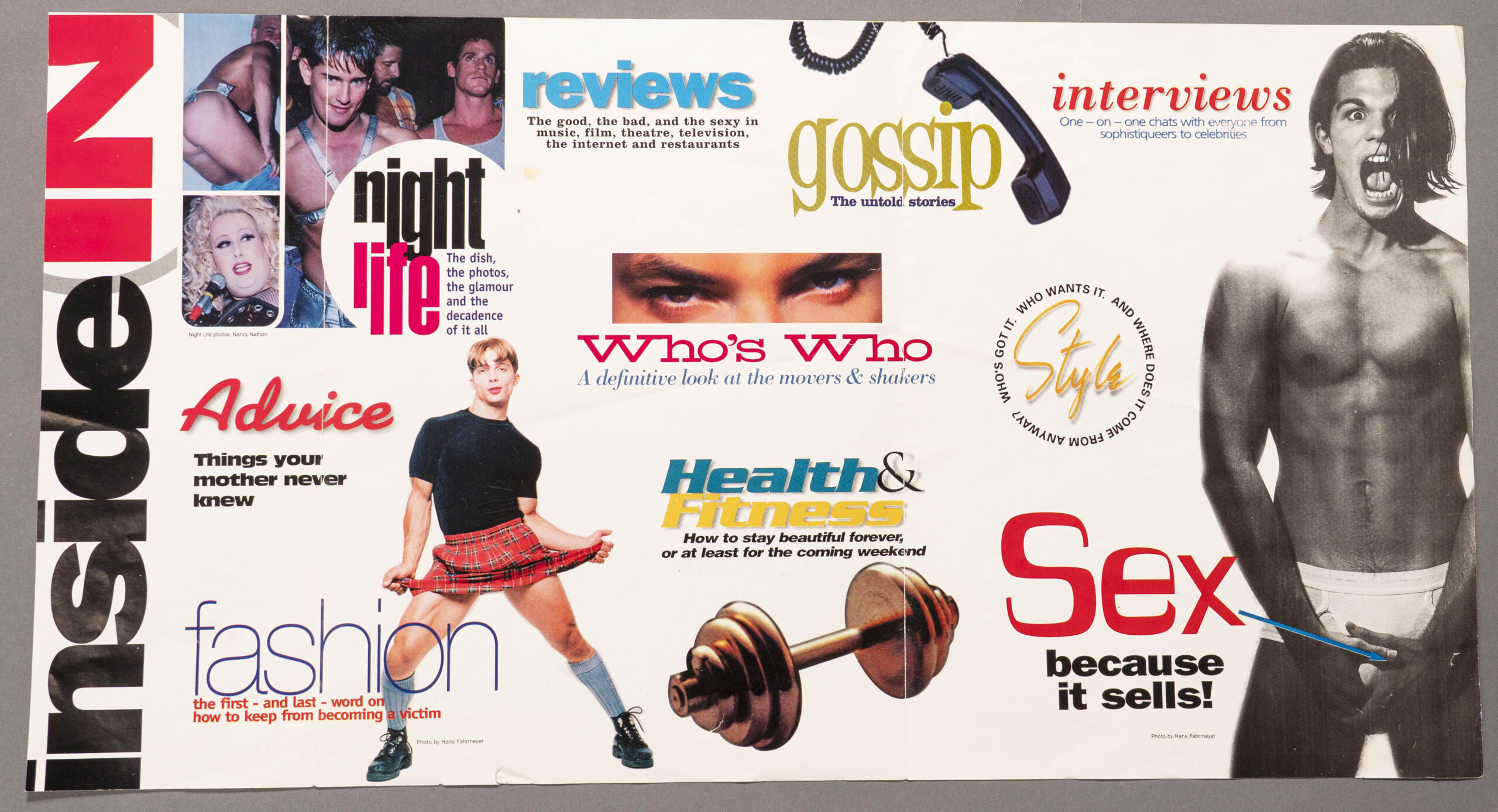
beibngIn and Out
After a disastrous year at The Advocate, it was time to get local—WeHo local, in the form of what is commonly called a rag: IN magazine. It was published by Frontiers magazine, Southern California’s oldest and largest lesbian, gay, bisexual, and transgender (LGBT) publication. Founded in 1981, Frontiers was freely distributed at gay bars, clubs, and businesses throughout Southern California. The biweekly publication covered local, national, and international LGBT news, entertainment, HIV/AIDS topics, and other important issues. It also included its popular escort listings section, Frontiers4Men. As of February 2014, it had a staff of 19 and claimed a readership of 270,000. Those were the good old days.
IN magazine, however, was another story entirely.
Our offices were down the street from Frontiers. We had little to do with them other than the occasional visit to the publisher, Bob Craig. While he was the publisher, the actual founders and owners of IN were David Stern and Mark Hundahl.
IN was what you might call a “start-up.” It didn’t exist as a magazine—only as an idea. Its creation fell to me. I didn’t trust myself to handle both editor and creative director roles, so I set out to find an editor.
JV McAuley was one of the funniest people I’ve ever met. His wit was quick and rampant—he was like a Robin Williams character: energetic, fun, and engaging. He had created a drag persona, Shelvelva Kennedy. He was funny… until he wasn’t.
There’s a mythology that grows around people and publications—and IN has its myths. For the record, this is a recollection based on facts, as I see them.
JV was a good editor. And an alcoholic. I had to take him across the street to the gay bar, Gold Coast, and get him plastered just to get his creative juices flowing. They did flow—sometimes like a river, sometimes like a fire hose.
At one point, the Frontiers editors took notice of our little rag. I came up with a cover story called “State of the Union,” about gay relationships. My friend John Skalicky did the portraits; I had worked with him on previous publications.
I worked very hard on this magazine, nights and weekends, often alone. So it was a complete shock when, one afternoon, I was called into Bob Craig’s office and told they could no longer employ me. I was asked to pack my things and leave. I returned to the office and there sat JV, whose only words were, “I didn’t know.”
The peculiar thing about being fired is that it messes with memory. The moment is filled with confusion and hurt—not logic or comprehension.
IN magazine was meant from the start to be different than Frontiers. While Frontiers leaned political, IN Los Angeles adopted a lifestyle-oriented approach, akin to People magazine, focusing on celebrity profiles, entertainment, and cultural features.
After my departure, the magazine hired an art director down the hall who did White Party flyers. The magazine quickly reinvented itself as a publication serving the gay party crowd.
Years later, David Stern and I exchanged emails and letters. In one conversation and in a letter he wrote after I expressed my hurt about my firing:
Thank you for getting real with me, I do remember seeing you in public a while back and having a great conversation with you and how great you looked. As for what you believe, I can't change that, but it is not my truth. For one, I did not start a IN out of retaliation, I offered to buy into Edge with the owner of Golds Gym backing me as he knew I really ran the place. They turned me down and fired me. Bob & Mark were going to start a mag. and they wanted me to run it. I pony upped my own cash and became their partner. IN was started for those reasons, yes at the start of it I thought it would make me happy to see EDGE fold, but when it actually happened that was not the experience. EDGE folded when we were at press with our 2 year anniversary issue, it brought me no joy, like I thought it would. I actually thought it was a really sad day, because none of it had to go down that way. You were long gone by then, so that's a pretty big assumption on your part as to how I felt about that when it happened. Nor do you know that both the prior owners, Merrill & Dennis, reached out to me and made an ammends for the way they treated me long before it folded, and all those ill feelings were healed long before its demise. It was a sad day indeed, and a huge lesson and period of growth for me. As for you, my only thoughts on you are that you were/are mega talented and you were really creative and fun to work with, even if we didn't agree on things like the Mothers Day cover, you still brought a lot to the table. You may believe what you want, but Bob had control over IN for the first couple of years. I had to hire a lawyer just to get access to the books, and when he died we had to sue his estate because he embezzled around 1/4 million from the company (much longer story than that.) That was in 1998, I had no idea you felt that way, what a long time to habor such resentment. I am truly sorry that you have carried that for so long. Guess one can't be loved by everyone, but I know in the big picture, I've done a lot of good and have tried hard to make a difference in the community. Again, I am very sorry that was your experience and perhaps it brings you joy to know that I am out of Frontiers. If that is the case, then so be it, enjoy it, but I think it'd be great to go grab a coffee and talk, but sounds like you might want to throw darts at a picture of me instead. -lol Seriously, would be great to sit with you and talk it thru and catch up, I wish I would have known this sooner.
Revisiting the letter i realize I have indeed harbored resentment. Ironic that Stern says his previous employers reached out and made amends—I cannot say I had that treatment.
JV, never contacted me. The story goes that he was using Crystal Myth and would disappear for days. He too finally lost his job and moved to Iowa to work for a Whole Foods store.

The Boy Who Drew the Studio One logo.
I must have been in my early twenties—still a boy, really—wearing glasses and tired of hearing, “You look so great without them.” What I wanted, more than anything, were contact lenses.
That’s how I met Scott Forbes, an optometrist in West Hollywood who fitted me with my first pair. Somewhere between the exam chair and small talk, he mentioned he was planning to open a dance club. He had a name for it: Studio One.
I told him I was thinking about becoming a graphic designer. This was before computers, before screens—when design meant pencils, paper, and nerve. I asked if I could come back with some ideas.
Weeks later, I did.
I handed him sketches—rough, hand-drawn concepts—but he saw something in them. He told me he liked the direction and that he’d send the work to a boutique design agency on Melrose Place to be properly rendered for print and signage.
The agency was run by Paul Hauge.
I remember physically carrying the sketches there myself. Somehow—whether by timing or luck—I was hired.
My first assignment was to measure the entrance of the building. It sounds simple, but it wasn’t. It required math, architectural understanding—things I didn’t have. Maybe I came across as more capable than I was. Maybe I wanted to believe I was.
I couldn’t do it.
I was terrified of being exposed—of failing in a way that felt total. At one point, overwhelmed and panicked, I cut myself with an X-Acto knife. Not for attention—just fear, pure and quiet.
I didn’t last long there.
I was let go.
But the logo survived.
It went on to live a life of its own—appearing on signage, on matchbooks, on the walls of one of the most legendary gay clubs in Los Angeles. Years later, it resurfaced in the documentary about Studio One, a visual shorthand for an era.
You may have seen me in that documentary—about five seconds of me.
Around that same time, I had another idea: a T-shirt. A posterized version of the Hollywood Sign, set in a circle. Excited, I took it to a shop on Melrose Avenue that produced and sold T-shirts. They agreed to make them for me.
As I was leaving, I flipped through their book of designs.
There it was.
My T-shirt. For sale.
Graphic design, I would learn, doesn’t always belong to the person who creates it.
More than anything, though, it was something I understood. Something I could do. I have envelopes I designed still hanging on people’s walls. I was heavily influenced by Art Deco—the geometry, the lettering—and I developed a kind of formal, almost ornamental handwriting that I still have today.
I would later teach typography in college.
It’s funny. Graphic design was never glamorous. It didn’t particularly pay well—though that may have been me. And unless you were willing to promote yourself endlessly, no one really knew who you were, or cared.
But it chose me.